Saturday, July 29, 2023

In Review: The X-Men's Krakoa Era


Psst. I'm still over on Substack, but I did say this would be my receptacle for whatever dragged-out, uncritical pop culture writeups I might feel irresistibly compelled to throw together. I'm afraid the time has come to use it in that capacity.

*          *          *

American superhero comics have it really bad these days.

Dating back to the 1930s, the original business model of the comic book publisher was simple: grind out a slew of cheaply printed monthly (or twice-monthly) serials and/or anthologies, and sell them at newsstands and chain stores across the county. They were a popular sensation, but their long-term decline began with the dawn of the Television Age. As the world turned away from print matter, the scheme gradually stopped working. With newsstands on the decline and comic book shops decimated by the aftereffects of the Great Comic Crash of 1996, publishers compensated for declining sales by raising production value and jacking up cover prices beyond what a kid with a weekly allowance (or even an adult with a wage job) can afford to splurge on several times a month. As the once-mighty superhero comic became more of a niche product (and as the internet killed magazines in general), drugstores, supermarkets, and gas stations stopped stocking them. For the last decade and a half, their collected editions have been getting their asses kicked by manga, and now their digital editions have the webtoons juggernaut to compete with. At this point they're pretty much R&D divisions for Disney and Warner Bros' film and television studios, and comfort food for thirty-to-fifty year old males who collected them as kids and never fell out of the habit.

Thursday, June 8, 2023

Locking the door but leaving the lights on

So I've got a Substack now.

I've already gone over the reasons for wanting to move on. Blogger is a zombie platform. Substack hosts a livelier scene, and its architecture is much more interlinked than Blogger's. Maybe—maybe—I can get involved in the "community" and make the acquaintance of people I vibe with. I'm probably kidding myself (writers are an off-putting breed, let's be honest), but one can hope.

And also: you can subscribe and get updates right in your inbox without having to check back every couple of weeks! HOW EXCITING! I understand Blogger used to be able to do this, but no longer. (Like I said: zombie platform.)

This blog is looking like a hoarder's house to me at this point, and I thought it might be fun to try something a little different—and with a more defined purpose. When I started this thing, the idea was to just treat it as a repository for whatever thoughts I cared to elaborate on, and lately I'm feeling like I might do better by limiting myself to a narrower set of themes. Restrictions promote creativity, after all.

Maybe I'll periodically return here to post fluffy stuff about video games, comics, etc. when I feel compelled to write it. (I really had a lot of fun scribbling about Shade, The Maxx, etc. over the last few months.) Heck, maybe I'll get tired of Substack and wander back by the end of the summer. Who knows?

So, again: Beyond Easy probably won't be updated for a while. Go here instead.

Hmm. The space could use a bit of gussying up. I'll get to it sometime.

Saturday, June 3, 2023

Kontemplating Komix: I Feel Sick (1999–2000)

I will not be unconvinced that the title is an
End of Evangelion reference.

When we were talking about The Good Old Days some years back, my hometown friend Dave said: "Johnny the Homicidal Maniac was our Catcher in the Rye." The observation was too on-point not to get permanently stuck in my memory. Dave certainly has his moments.

Jhonen Vasquez's seminal indie comic (which ran for seven issues between 1995 and 1997) and its spin-off, Squee! (four issues, 1997–98) were a fucking revelation for kids like Dave and me—socially askew goth bois with a morbid sense of humor, and who maybe thought a little too highly of ourselves. Johnny not only made us laugh ourselves hoarse and inspired us to imitate Vasquez's idiosyncratic art style in our classroom doodles, but reaffirmed us in our belief (one not uncommon in teenagers who wore fishnet sleeves and painted their fingernails black) that virtually everyone in the world was stupid and horrible, and if we were fucked up, it was because we were surrounded by mean-spirited and obtuse assholes from wall-to-wall.

When I was a sophomore in high school, I had every Johnny and Squee! poster on my bedroom wall. My wardrobe contained no fewer than four different T-shirts with Vasquez's characters on them, and I quickly wore them out and kept wearing them anyway. I ordered the Bad Art Collection from the Slave Labor Graphics catalogue and actually read it—multiple times. I sent Vasquez a long email and saved his reply on my hard drive. (I remember it involved Final Fantasy VII.) Yes, I was obsessed. Vasquez has that effect on people; he's like David Foster Wallace for young moth goths. I meant for that to read "mall goths," but I'm going to let the typo stand.

Thursday, April 13, 2023

Kontemplating Komix: Empowered (2007– )

Oh jeez. We're doing Empowered? Okay. Let's talk about Empowered.

Empowered is...

No, damn it. No. Let's not start like this.

Sunday, April 9, 2023

The Mall & The Sprawl & The Automobile

Victor Gruen, from The Heart of Our Cities: The Urban
Crisis, Diagnosis and Cure
(1964)


Forgot to mention that the good people at Sublation Magazine posted an essay of mine.

Monday, March 27, 2023

Kontemplating Komix: The Maxx (1993–98)


I'm really and truly at a loss as to where to start with this one. Sam Kieth's cult comic is a rabbit hole if ever there was one.

Sam Kieth? Who's Sam Kieth? Well, he co-created Sandman with Neil Gaiman. True story. Look at the illustration credits for the book's first five issues. He voluntarily left the book because he didn't think his work was a good fit—and, frankly, he was right. But the fact stands that Kieth was responsible for Morpheus' visual design. He also did some work for Marvel, turning in some absolutely baller art for the Wolverine stories in Marvel Comics Presents, and did some Detective Comics covers for DC. So when he launched The Maxx in 1993, Kieth wasn't exactly an unknown in the industry.

We also need to acknowledge the contribution of William Messner-Loebs, whose previous credits included popular authorial runs on Wonder Woman and The Flash. Loebs acted more or less as The Maxx's co-writer and Kieth's editor for more than half the book's run.

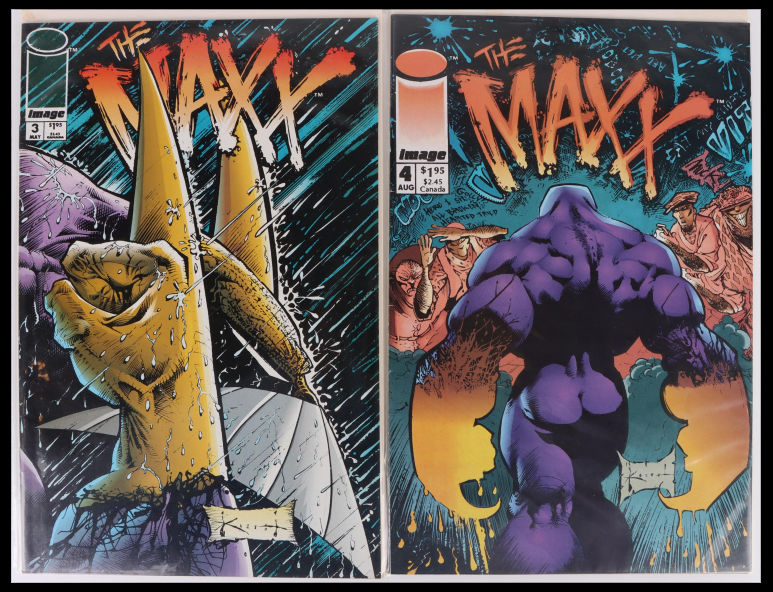
Let's begin with the cover.

We're at our local comic shop in 1993. We pick The Maxx #1 off the wall. We're conscious of the man behind the counter and feel his gimlet eye on us. As soon as we look at the interior pages, he's going to tell us that his store isn't a library and tell us to buy it or put it back. 

Let's say that we also notice issues #3 and #4 shelved next to it. Maybe they'll gives us a clearer idea as to what The Maxx is about.


Let's say we decide to start at the beginning and pick up issue #1. What sort of comic book do we suppose we're taking home?

Monday, March 13, 2023

The mummery of "You Cannot Walk Here"

The music I want to hear changes with the season, and during the fall and winter months I crave industrial. Since the clocks were set an hour back in November, I've been listening to a lot of Wumpscut in my little alcove in the office. I've enjoyed listening to KMFDM's Nihil all the way through at least once a week. Give me Skinny Puppy, give me SPK and Frontline Assembly and Leæther Strip.

Sometime in early February I started on a Birmingham 6 binge. Maybe we could say they spent their all-too-short career playing second fiddle to KMFDM, but I love them all the same. I kept their 1995 album Assassinate (a mixed-up stateside version of 1994's Mindhallucination) in heavy rotation throughout high school, but it wasn't until the days of file sharing that I came upon their epic sophomore effort Error of Judgement (featuring Front 242's Jean-Luc De Meyer).

A week or two I caught myself singing along to to Error of Judgement's fifth track, "You Cannot Walk Here." And why not? It's a jam. But listening the lyrics coming out of one's own mouth can be jarring, perhaps to the extent that some neurotic mutant might wish to issue an apologia for the track and his enjoyment of it.

Wednesday, March 8, 2023

Decisions, Update

I appreciated people weighing in on the Substack question, although I still haven't come to a decision.

Blogger is a zombie platform. Few people use it anymore, and Google retires existing features more often than it implements new ones. Substack is fresh, and it has a scene. Maybe I'm kidding myself, but it seems like Substack would be an opportunity to join in and contribute to The Conversation instead of talking to myself here.

Two things give me pause:

(1) I'm a bit of a packrat. I don't like the idea of tossing out over a decade's worth of Content. Although—maybe this would be a good opportunity to sift through it all, pick out anything that's truly worth preserving, and dispose of the dross.

(2) This is a Blog. My intention was never to Build a Personal Brand or focus exclusively on Topic X or Theme Y, but to just spout off whatever was on my mind during a given day or week or month. I feel like if I switched to writing a Substack newsletter, I'd have to make it about something. I might even end up pressuring myself to go topical, which I've never, ever been good at (except maybe when I was making comics about video games years and years ago). Then again, restricting myself to subjects situated within certain parameters could improve my output. Who knows?

I'm not ruling anything out yet, but I should probably make myself choose whether to fish or cut bait sooner than later.

Sunday, March 5, 2023

Kontemplating Komix: Shade, The Changing Man (1990–96)

This has been something I've meant to do for a long time. The images I collected for a Shade, The Changing Man writeup are in a folder that's almost three years old. There just never seemed to be a good time to go ahead and make it happen. Lately I've gotten it into my head that there are a couple of other underappreciated comic books that I'd like to write about, so I figure I might as well do a little series, starting with Shade.

Shade, The Changing Man is the seminal comic serial of author Peter Milligan, who might be better known for his work on mainstream superhero titles like Detective Comics,* X-Force, X-Men, and Justice League Dark. It launched in 1990 and concluded in 1996 after seventy issues.

*As a matter of fact, it was Milligan who came up with the idea of the bat-demon Barbatos, and he was a co-creator of Azrael, the guy who briefly replaced Bruce Wayne as Batman after the Knightfall storyline.

I can't speak to how popular Shade was in its own time, but it's telling that as recently as 2014, the trade paperback collections only went up to issue #25. (Having been introduced to the series through an impulse purchase of the first volume at a bookstore, I can't tell you how crazy this made me.) I can't remember what year it was that I checked again, but it couldn't have been more than a half a decade ago that I browsed the DC Universe digital catalogue and found that it excluded issues #51–70. 

Compared to 1990s Vertigo hits like Sandman, Preacher, and Doom PatrolShade, The Changing Man has been mostly forgotten. I won't venture to guess why that might be—its pervasive weirdness and the unremitting flakiness of its protagonist could have something to do with it—but whatever the reason, Shade's status as an eclipsed also-ran is a damned shame. It's easily as good as any of its Vertigo contemporaries, if not better.

Sunday, February 5, 2023

Decisions

I'm thinking about migrating to Substack.

Would anyone care to talk me out of it?

Saturday, February 4, 2023

On AI Art: Remember, We Asked For This

Pianola advertisement (1909)

As per Professor McLuhan, any technology can be thought of as an "outering" of human capacity, or otherwise as a prosthetic extension of one or more body parts.

The original musical instrument was the human body itself. We can rhythmically chant words, vocalise, click our tongues, clap our hands, and stamp our feet. Drums, flutes, idiophones, bullroarers, and every other instrument of prehistoric origin don't represent any invention of music so much as an expansion of technical possibilities and the ramification of social practices surrounding instruments and their use.

Music in preliterate "primitive" societies was seldom made unless it served some purpose exterior to mere aesthetic enjoyment. Nor was it very often devoid of improvisation: a long, complex piece might be developed, rehearsed, and laboriously transmitted to a student, but variances between one performance and the next were inevitable when a composition's only template was the musician's recollection of the last time he played it. If a song wasn't composed on the spot, it must have been either fairly simple or otherwise composed of stock "phrases," patterns that could be memorized and chained together in the manner of a Homeric bard's repertoire.

With literacy invariably came some form of musical notation, and the means to give the evanescent event of the instrumental performance some semblance of object permanence. A composition could not only be made repeatable, but eminently transmittable. Figuratively speaking, notation mechanizes music-making: trained human performers and the tools of their trade become a living, composite nickelodeon that accepts a coded input and produces a concert as its output. 

Friday, January 27, 2023

Punk, Conservatism, & the Mandate of Heaven

A couple of weeks ago, a column in the Economist ("How rappers are strengthening Donald Trump’s movement") sent a shiver down my spine.

Mr Townsend ["Topher"], 31, served as a cryptological analyst in the Air Force before moving to Philadelphia with his wife, a teacher. He loves the 'Sip, as he calls his state; you could not pay him to move to "any of those Democrat-controlled cities." A fireplug of a man who raps—and eats lunch—in a MAGA-red knit cap, he can glower with the surliest of rappers. But his music can also be buoyant and empathetic and, in person, so is he. His influences range beyond Mr Trump to Booker T. Washington, Malcolm X and Eminem. 
Mr Townsend grew up in the hamlet of Kilmichael, Mississippi. His mother taught him to be the man of the house by ten years old, he says, but she drank, and his father, married to another woman, was not much in his life. When he was 12 or 13 one of his mother's boyfriends hit her in the face with a two-by-four, and as she bled it took an hour for the police to respond. "I learned early on no one was coming to save me," he says. "And I think that's what fuels my ideology today. No government, nobody."

Mr Townsend's contempt for authority points to a reversal of cultural polarity under way in America. The left once drew energy from scorning authority and bourgeois convention. But as it becomes America's enforcer of social norms, it increasingly treats the arts as a tool for instruction. As a result it is surrendering what puts the arts in society’s vanguard, the capacity to question and shock. What more transgressive act could an artist perform than to don a MAGA cap, as Kanye West did?

The boldfaced sentence encapsulates an idea that's been a nagging source of angst for me over the last half decade, and reminds me of something a former acquaintance of mine from high school once said.

The guy's name was Paul. We were friends insofar as we usually ended up at the same cafeteria table if we shared a lunch period, and we associated with the clique of punker kids who congregated by their leaders' lockers during the fifteen minutes between the general arrival of the students and the first bell. I never saw him outside of school.

As a teenager, Paul was into the Dropkick Murphys and the Misfits, and looked up to George Carlin as a hero. In retrospect, whenever politics came up, his had a markedly libertarian tilt.

After everyone in the country in Facebook and friended their old acquaintances around 2006–8, I got a window into where Paul's life was headed. Mostly I remember him making a documentary about the frontman of a punk-/goth-rock act; it pricked my attention because I was working on The Zeroes at the time. He was also doubling and tripling down on his libertarianism. Before I got off Facebook around 2015–16, Paul had gone full-on Proud Boy. I don't know what he's been up to since then, and I'm sometimes tempted to do some digging to find out. I think it's safe to guess he was within the city limits of Washington, DC on January 6, 2021.

I forget when exactly it was—probably sometime between 2010 and 2013—that I went on Facebook and read an opinion of Paul's which I still remember because it seemed so insane. However he worded it, the gist was: "the new punk is conservativism."

Friday, January 13, 2023

Magic: The Gathering: The Worldbuilding: The Writeup (9 of 8)


POSTSCRIPT: There were like five additional Magic: The Gathering posts after this one, which more or less covered all the sets from 2011 to early 2023. I erased them because they were embarrassing. I don't feel too mortified by the earlier writeups, since they follow the game's humble origins, growing pains, and maturation—but the later ones were a protracted wank over an IP that earns a billion dollars annually, written in the fog of seasonal affective disorder and probably under the influence of meds that weren't working out. I'm keeping this one up and leaving it at that. 

Friday, January 6, 2023

Twelve Rounds with Kant (part fourteen)

Wassily Kandinsky, Circles in a Circle (1923)
beautiful.

I've ran out of steam. Between the business of living, the time I'm allotting to other sorts of writing (some of it is more pop culture gibberish you can look forward to reading on here; some of it is fiction which may or may not ever see the light of day), and Kant fatigue, I don't have energy enough to grapple with the Critique of the Power of Judgement with much vigor. I think this is going to be the last Kantpost for a while.

I'll do at least one more later; for all its faults and glitches, the third critique is an embarrassment of riches. It's the kind of book you could write at least two books about.

Anyway, let's talk about...


• BEAUTY

I am out of my depth here.

Here is the Stanford Encyclopedia of Philosophy's list of interpretive issues with the Critique of Aesthetic Judgement. Have a look.

That's a professional's take, and I won't pretend I'm on that level. Stress-testing Kant's analysis of taste and beauty on its own terms is more appropriate to a graduate student writing a dissertation, not a dilettante's blog post. And I can't in good faith attack Kant's theory of beauty when I don't have a comprehensive alternative to recommend in its place. I'm agnostic on the subject.

I respect anyone with the stones and the self-confidence to attempt a systematic definition of beauty. If the what is art? conversation typically leads to a quagmire, what is beauty? ends up in some spatially impossible MC Escher painting. We're all of us convinced we understand what beauty means, but struggle to articulate it in objective terms that stand up to scrutiny. In this we're like Supreme Court Justice Potter Stewart explaining his legal criterion for obscenity: I know it when I see it.

Friday, December 23, 2022

Twelve Rounds with Kant (part thirteen)

Well, here we are—about to take a look at the second division of Kant's Critique of the Power of Judgement, the Critique of Teleological Judgement. When I say "let's take a look at," I mean "let me reread, take notes, and summarize it for myself because a Kant critique makes Ulysses seem like light reading." After this there will be one more Kantpost where I'll try and figure out whether the third critique really contains kernels of valuable wisdom, of if the heautonomy of the faculty of judgement is really the friends we make along the way. 

Let's begin with a few excerpts of some things Kant says in this section that must strike the twenty-first century reader as embarrassingly outmoded. Might as well it out of the way now.

Nothing in it [an organism] is vain, purposeless, or to be ascribed to a blind mechanism of nature.

My tailbone and appendix say otherwise, chum. I'd include my wisdom teeth, but I had them pulled out of my head because they'd have deformed the rest of my teeth if they'd been left in. Lost track of 'em afterwards. Pretty sure they're blocking me on the Face Book.

It is well known that the anatomists of of plants and animals, in order to investigate their structure and to understand for what reason and to what end they have been given such a disposition and combination of parts and precisely this internal form, assume as indispensably necessary the maxim that nothing in such a creature is in vain, and likewise adopt it as the fundamental principle of the general doctrine of nature that nothing happens by chance.

The processes of natural selection and evolution are catalyzed precisely "by chance." The hatching of a bird with a somewhat unusually shaped beak that turns out to be better suited to the selective pressures of its environment than its nestmates' occurs precisely by chance. Chemistry, whose laws govern the behavior of nucleotides, is a science of probabilities. 

[I]t is quite certain that we can never adequately come to know the organized beings [organisms] and their internal possibility in accordance with merely mechanical principles of nature, let alone explain them; and indeed this is so certain that we can boldly say that it would be absurd...to hope there may yet arise a Newton who could make comprehensible even the generation of a blade of grass that no intention has ordered...

You mean to tell me the smartest boy in Königsberg didn't foresee genome sequencing? Well then, how smart could he have really been? Dummkopf!

Strictly speaking, the organization of nature is...not analogous with any causality that we know.

ever hear of mitosis lolol chromatids from the window to da wall lol

But if one leaves this aside and looks only to the use that other natural beings make of [grass], then one abandons the contemplation of its internal organization and looks only at its external purposive relations, where the grass is necessary to the livestock, just as the latter is necessary to the human being as the means for his existence; yet one does not see why it is necessary that human beings exist (a question which, if one thinks about the New Hollanders or the Fuegians, might not be so easy to answer)....

Immanuel, you racist prick.

There. Now that we can set all that aside...

Tuesday, December 6, 2022

Twelve Rounds with Kant (part twelve)

In some ways the Critique of the Power of Judgement resists synopsis. The Critique of Pure Reason and Critique of Practical Reason each possesses a linear structure wherein an elaborate argument is built up from its foundations and followed to the pinnacle of its conclusion, whether Kant intends to construct and justify a bounded but flexible epistemological system (the first critique) or to provide an annex in which that system can house a moral objectivism, assert the logical and practical necessity of doing so, and explore what that entails (the second critique). The third critique, on the other hand, often seems tangential to itself.

Let's say Kant has a greater and a lesser ambition for the Critique of the Power of Judgment. On a more modest level, Kant wants only to examine the faculty of judgement in and of itself, and see if it contains an a priori guiding principle like the other two "higher" cognitive faculties (the understanding and reason). If that's the case, he pins that principle (the perception of purposiveness) down in the Introduction, and having established it as conclusively settled, proceeds to spend the next three hundred pages ruminating on its ramifications, with detours into matters of fine art and biology. Any outline of the procedure would be as scattershot as the book itself, and academic wonks have noticed that Kant doesn't actually ground many of his remarks on beauty and organic forms upon the intricacies of our judging faculty. (See here, sixth paragraph.)

More daringly, Kant also purposes to span the divide between the remote continents of natural and moral philosophy. That's a hell of a hook (especially if you're already familiar with the organization of the Kantian system), and it had me eagerly turning the pages as soon as Kant alluded to the possibility in the Introduction. Imagine my surprise when our dear philosopher presently embarked on a deep dive into judgements of taste and art.

Not that this stuff is altogether irrelevant to Kant's stated purpose, and not that it wasn't tremendously influential in its time—it cannot be emphasized enough that the Critique of the Power of Judgement inaugurated the definitional shift of the word "aesthetic" toward its modern usage—but it's possible to finish the Introduction, skip the Critique of Aesthetic Judgement altogether, and begin reading the Critique of Teleological Judgement and not find your understanding of it much impaired. We simply can't do this with the Critique of Pure Reason: if the first-time reader leapt ahead to the Transcendental Dialectic after reaching the end of the Transcendental Aesthetic, he'd find himself hopelessly lost.

Giving an overview of the Critique of the Power of Judgement with regard to its more grandiose intention without setting aside whole swaths of the book as extraneous is a daunting prospect. People who've made careers for themselves reading and writing about Kant have evidently taxed themselves trying to discern an internal consistency within the text as a whole. As an amateur, I find myself at something of a loss.

I feel that the most sensible and expedient way of writing about the third critique would be to look separately at its aesthetic and teleological sections, paying attention to the areas where the concerns of the first and second critiques overlap. I should say again, for anyone who's actually reading this, that I'm writing this as a summary for my own benefit (internalizing the text by compelling myself to parse and restate parts of it), during which I'll pretend that I'm explaining to a curious roommate what I've been reading lately. 

Sunday, November 27, 2022

Twelve Rounds with Kant (part eleven)

Let's set the tone here with an excerpt.

Since the freedom of the imagination consists precisely in the fact that it schematizes without a concept, the judgement of taste must rest on a mere sensation of the reciprocally animating imagination in its freedom and the understanding with its lawfulness, thus on a feeling that allows the object to be judged in accordance with the purposiveness of the representation (by means of which an object is given) for the promotion of the faculty of cognition in its free play; and taste, as a subjective power of judgement, contains a principle of subsumption, not of intuitions under concepts, but of the faculty of intuitions or presentations (i.e., of the imagination) under the faculty of concepts (i.e., the understanding), insofar as the the former in its freedom is in harmony with the latter in its lawfulness.

One sentence. Who could have written this sentence but Immanuel Kant? And what could occasion wheeling him here but my having finally finished reading The Critique of the Power of Judgement (1790), the final installment of the Kant Trilogy?

(Note: the title most often translated into English as "The Critique of Judgement," but the Cambridge University Press edition I've been reading is titled "The Critique of the Power of Judgement," which is closer to the meaning of the original German (Critik der Urtheilskraft.) Editor and translator Paul Guyer (or perhaps Cambridge University Press) insists on the barbarous spelling "judgment," which I reject and will not reproduce here.)

Since about part six of this exercise I've regretted giving myself an arbitrary framework vis-à-vis the title. Twelve rounds, twelve Kantposts. I spent way too much time at the beginning idly ruminating on the metaphysical implications of the first critique's Transcendental Aesthetic when the Transcendental Dialectic constituted the real meat on the bone. And now here we are on part eleven of twelve, and I've got to somehow synopsize and/or meditate on the Critique of Judgement in just two posts. This bout might have to go on for an extra round. Goodie.

Once again, let me emphasize that I'm doing this strictly for the purpose of engaging with Kant in a way that helps me to better understand the material than I would if I just put the book away and went on with my life. Nothing that follows should be taken as authoritative. I'm writing more or less as a student.

So: the Critique of the Power of Judgement reminds me of Marilyn Manson's album Holy Wood.

I can't believe I just typed that. Let me explain.

Saturday, October 22, 2022

Celebrity, Mythology, & The Machine (part 9)

René Magritte, The Lovers (1928)

Whoops. A couple of days ago I accidently hit "publish" on the draft that I'd been using as a repository for notes and stuff cut out of other pieces. I never said I was any good at this.

IX. THE TECHNOLOGY OF ESTRANGEMENT

The development of media technology in the West was from the beginning a movement toward individuation and estrangement. It's right there in the Latin meaning of the word. Medium. A middle; something that stands between.

Information in a nonliterate society cannot remain inert. It must be enacted, it must circulate. The externalization of speech as written language denuded human interdependence in its original, direct forms. The more one can learn from a book, the less one requires a teacher, guide, or knowledgeable companion. When news of community affairs is delivered through a paper, one no longer needs to hear it from her neighbors. Stories and poetry taken in through the eye instead of the ear become matters of private leisure instead of communal occasions.

In a primary oral culture, the transmission of verbal information necessitates a direct interaction between speakers and listeners. Communication here is immediate and interactive; feedback from the listeners influence what the speaker says and how he says it, and the exchange of information most often occurs under circumstances which are conterminous for both speaker and listener. In other words, the contexts of the acts of speaking and listening overlap. But this is obvious: the speaker wouldn't be speaking if a listener weren't nearby, and vice versa. A social environment such as this can't be expected to breed many introverts or loners. "Primary orality fosters personality structures that in certain ways are more communal and externalized, and less introspective than those common among literates," Walter Ong writes in his 1982 classic Orality and Literacy. "Oral communication unites people in groups."

Conversely, between the novelist and the reader of her book is interposed a labyrinthine social complex that confronts each of them in a different aspect.

Tuesday, October 18, 2022

Celebrity, Mythology, & The Machine (part 8)

YouTube screencap ganked from npr.org.

Just kidding. There's still one more to go after this. I'm just having too much fun.

VIII. DEFINITIONS, METAPHORS, VELMA & HATSUNE

I would like to submit two provisional definitions.

First: the celebrity. He or she is a media entity whose content—those artifacts bearing some aspect of their likeness and/or their name—passes some arbitrary threshold of circulation such that it alters the behavior of some arbitrary number of viewing and/or listening persons along similar lines. We can set the bar as high or as low as we please, though it is generally understood that a proper celebrity commands the attention of some tens of thousands of people or more.

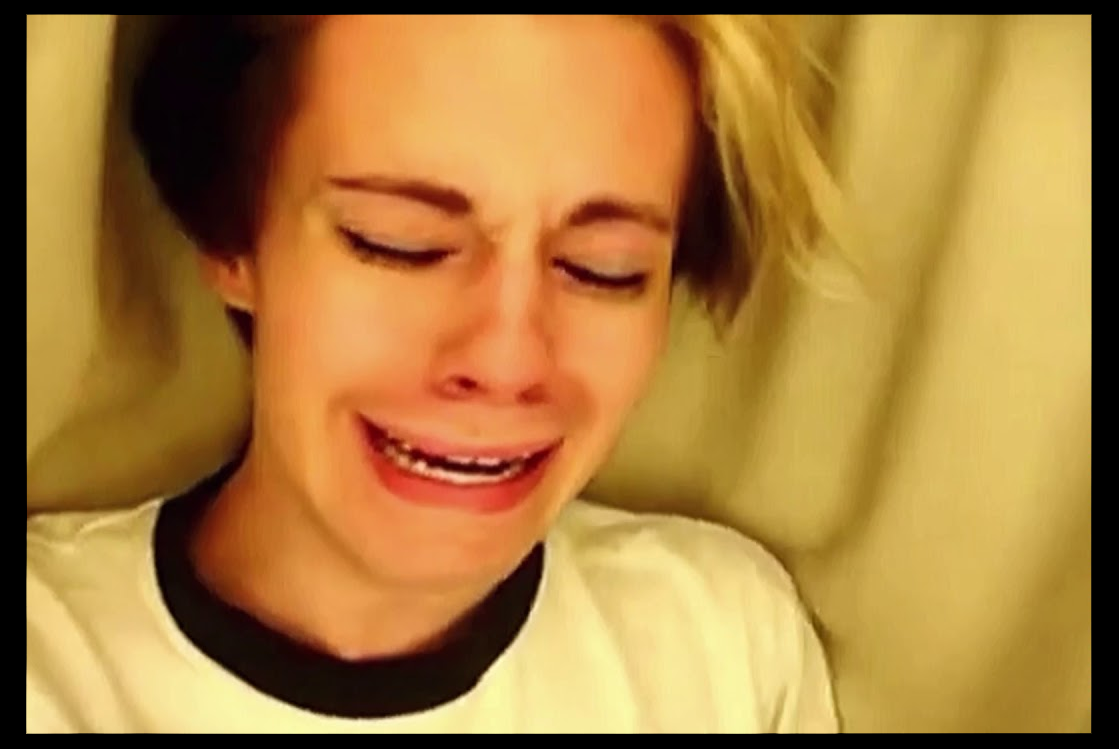
This is not a rigorous definition—surely some more thoughtful person can do better—but it designates the celebrity status as function of media "presence" (which we put in quotation makes because the template for the artifact is very seldom present where the majority of spectators are concerned), and also of the artifacts' effects on those who engage with them. The second part is more slippery than the first, since it doesn't differentiate between something as simple as hovering over a recognized name on a film's IMDB page and something as drastic as recording a sobbing excoriation of the press' calloused treatment of a troubled pop star and uploading it to YouTube. But in either case, the act is elicited by a history of engagement with content, not with the human beings to which is its attributed.

Second definition—tentatively, and far less rigorously—content is stimuli administered by a device. That device might be a film projector, a television screen, a smartphone, a Kindle, a car's stereo system, or whatever. Note that "content" wasn't the vernacular term which encompassed written material, television programming, film, music, etc. until the internet age.

Tuesday, October 11, 2022

Celebrity, Mythology, & The Machine (part 7)

Via Insider

VII. VIRTUAL REALITY

With a little shopping, the photo above could easily pass as a scene from an outdoor Harry Styles concert. This is a scene from a parade, not a judicial occasion.

Some people buy a ticket for a stadium seat so they can shout themselves hoarse encouraging and cursing their favorite football team; others visit the courthouse where a celebrity trial is being held so they can cheer on the dreamy litigant they've been stanning since high school. It's all the same: modern variations on the theme of the Great Dionysia.

Depp v. Heard played out like an ancient Greek drama in which the attentive public comprised the chorus. Two private persons, whom we all seemed to know, or felt we knew on the basis of our having so often seen and heard their likenesses in films, read interviews with them in glossy magazines, parsed and hit the Like button on their social media updates, etc., entered a courtroom in Fairfax, Virginia to settle a civil dispute. 

There was no possibility that the trial would ensue like a mundane legal process for determining whether the defendant's article in the Washington Post actually constituted defamation, as the plantiff alleged. The entire proceeding was livestreamed, and we viewed it as though it were a protracted film in which Depp and Heard were co-stars—that is to say that it was entertainment, witnessed, contemplated, and discussed by members of society in which entertainment is a profoundly serious matter.