Showing posts with label #occupy. Show all posts

Tuesday, July 3, 2012

Ponies, Plato, Plutocracies


Not much prepped this week. I've been too busy drawing ponies.

Also, I've recently started posting comics again.

I've got a bunch of stuff backlogged and will be posting a new one every ten days (roughly), which will amount to about four months of regular updates. If I'm able to draw more comics between now and then (these things are never certain), we'll keep running. If not, we'll just wait another six months, eight months, or however long it takes to build up another queue.

I thought it would be fun to roll out this shindig with a couple of 8 Easy Bits strips, just for old times' sake. I don't know why I figured the Author should have discovered the My Little Pony: Friendship is Magic phenomenon since we last saw him; but from there it does seem more predictably within his character that he should be inordinately inspired by his arrival at this brave new continent in his (severely skewed) intellectual world and determine to make it the subject of his latest opus.

I rather like how the scruff (a touch originally added by Mr. Wolff in one of the later strips) and unkempt hair has increasingly become the norm for the character. I like how the bastard is still evolving, even though he's still far from ever getting his shit together. (I think he's somehow becoming even crazier.) And I really like how he's still interesting (at least to me, anyway) even when the subject of his escapades isn't the fact that he inhabits a world where human beings and video game characters rub elbows on the sidewalks and supermarkets.

So yeah, the pony comic took much longer to make than I'll ever admit, and I have nothing but my own OCD to blame for it. The lessons here are that I should a.) estimate realistically how long a project should take, b.) making sure to account for my being batshit crazy about details. (I can point to more than a dozen things about the strip that I don't like, but for the sake of my own sanity I'm letting them be.)

Confession time: Greekdropping gennaion psuedos wasn't actually spontaneous, and was preceded by a Google search for "plato republic lie" and a click on the Wikipedia entry for "Noble Lie." I recalled the basic concept from an early book in the Republic, but needed a memory refresher. The Republic is a pretty dense slab of text, after all.

In the smallest of nutshells: having already established that his ideal state would need to have three basic classes of citizens (rulers, warriors, artisans), Plato (speaking through Socrates) says it will be necessary to foster upon the state's children the idea that, although the Earth fashioned them all, it mixed some of the clay with gold, some with silver, and some with bronze, corresponding to which of the three social strata they are more or less destined to inhabit. It's ordained, it's out of everyone's hands, and each citizen will have to accept his lot in life. It's not true (obviously), but Plato nonetheless asserts that this one "noble lie" will be necessary to preserve the state's cohesion.

A reader has already joked about the bluntness of the strip's "message," and I guess that's fair -- but really, I was less interested in making a point than in taking something absolutely innocent and delightful and warping it into something joyless and awful ("for the lulz," as they say). If I was really serious about preaching, I wouldn't have ended the thing with a sharp veer into a gag about horse assholes.

But yeah, sure -- I did a little thinking about noble lies while shopping the thing, and wondered if it mightn't be the case that every society is constructed atop one fundamental fib or another. So -- what about the United States?

The big American lie (or one of the big ones) is the one about Freedom. America is a free country. Americans are free people. Americans are freer than other people because America is the most free country of all countries. George W. Bush's and the Tea Pary's rhetoric could be pared down to FREEDOM FREEDOM FREEDOM MURICKA and lose little in the abridging. Americans scream and shout and beat their breasts and rub dust in their hair whenever they perceive some politician, law, or court ruling as "threatening our freedom."

First of all: the very concept of freedom is probably bullshit.

Second: off the cuff, I'd say that yes, United States citizens do have fewer sanctions on speaking and expressing themselves in ways that could be construed as offensive, controversial, unpatriotic, etc. than those of many other nations. This is an excellent thing. We are permitted to talk the talk. But many, many citizens are severely constrained to the extent to which they can walk the walk.

We're all of us placed inside the labyrinth of our civilization, and some people are immensely better-equipped to navigate it than others. When the structure of the labyrinth is determined mostly by economic forces, citizens in stronger economic positions can move about it more easily. Perhaps the more accurate metaphor would be to say that these people are capable of walking over or just passing through the same walls restricting the movements of their neighbors.

But I feel this analogy is hackneyed and you already know where we're going. But why not: when you have more money, you have more "freedom." People born into wealth are more likely to retain wealth. Those with a lot of wealth are more likely to acquire more wealth. Those born into poverty are more likely to remain in poverty. The nation's wealth is increasingly concentrating in the upper stratum; the wide majority of citizens is finding more and more walls shooting up out of the ground to block their progress.

Even if we imagine that freedom isn't a fallacy, the American version of it doesn't sound very much like freedom at all. Not when citizens' actions are restricted by their personal wealth; especially not when that factor is usually dependent simply on the economic circumstances into which they were born. But the noble lie of the Land of the Free is accepted as fact, and people in the lower classes rage against legislation that would likely benefit them on the grounds that "it hurts our freedom."


Incidentally, I just read an excellent GQ piece in which the author reports his investigative comparison between six Americans, each representing one of six basic economic blocs (from someone who lives on $200 a week to someone who lives on $625,000 a week). On the fifth rung of six he meets a man named Nick Hanauer, an early investor in Amazon.com whose taxable income is now $10 million on a bad year. Mr. Hanauer speaks of his own conception of the American noble lie:

There's something unusual about Nick. For a multimillionaire, he doesn't have your average multimillionaire view. In fact, he's come to believe that the system he benefits so richly from is built on nonsense — specifically, the idea that "the markets are perfectly efficient and allocate benefits and burdens perfectly efficiently, based on talent and merit. So by that definition, the rich deserve to be rich and the poor deserve to be poor. We believe this because we have an almost insanely powerful need to self-justify."

And the biggest nonsense of all, he says, "is the idea that because the rich are the smartest, and because we're the job creators, the richer we get, the better it is for everyone. So taxes on the rich should be very, very low because we're essentially the center of the economic universe, the font of productivity." Nick pauses. "If there were a shred of truth to the claim that the rich are our nation's job creators, then given how rich the rich have gotten, America should be drowning in jobs!"

Well.

To conclude on a cheerier note, my friend Jason is fiercely lobbying to have this made into a T-shirt:

Any creative ponypeople want to give her a name?

EDIT: Spyda K might have nailed it with "Nickie Fits."

Tuesday, April 24, 2012

NPM: From Nicaragua with Love


The nights are getting warmer, people are taking off their jackets, and Occupy is starting to appear in the news again. For those of you getting stoked for May Day, here are some pieces from Ernesto Cardenal's (1925 - ) From Nicaragua with Love collection (translated from the Spanish by Jonathan Cohen) to arouse your revolutionary spirit. The pieces in this edition were composed in the years between 1979 and 1986 -- after the Sandinista Revolution and during the Contra affair. (Historical context is very important here.)


Enjoy! ¡Viva la Revolución!


The Price of Bras

I have a niece who complains about the Revolution
because bras are so very expensive.
I don't know what it's like to have breasts
but I think I could go around without a bra.
My friend Rafael Cordova lives close to the village of Esquipulas
and he told me how many funerals used to pass on the road
               with tiny little coffins,
four, five, six, eight funerals
      every afternoon,
there were children's funerals
                     each afternoon.
The old people didn't die as often.
And a short while ago the gravedigger of Esquipulas visited him:
"Doctor, I've come to ask you for a little help,
              I'm out of work.
         There aren't any funerals in Esquipulas anymore."
Before, bras were not so expensive.
Now in Esquipulas there are hardly any funerals.
You tell me: What's better?


Economic Brief

I'm surprised that I now read
                   with great interest
things like
       the cotton harvest up 25%
from last year's crop
          U.S. $124.2 million worth of coffee exported
     up 17.5% from last year
a 13.6% jump in sugar is expected
             corn production dropped 5.9%
        gold dropped 10% because
of attacks by the contras in that region
likewise, shellfish...
When did these facts ever interest me before?
      It's because now our wealth,
                       meager as it may be,
        is intended
             for everyone.
                    This interest of mine
      is for the people, well,
                 out of love
        for the people. The thing is
now these numbers amount to love.
The gold coming out of the earth, solid sun
cut into blocks, will become electric light,
drinking water
              for the poor. The transluscent
mollusks, recalling to mind women, the smell of a woman
coming out of the sea, from their underwater caves
and colorful coral gardens, in order to become
pills, school desks.
                    The holiness of matter.
        Momma, you know the value of a glass of milk.
The cotton, soft bit of clouds,
            —— we've gone to pick cotton singing
               we've held clouds in our fingers ——
will become tin roofs, highways, and
the thing is now what's economic is poetic,
          or rather, with the Revolution
the economy amounts to love.


Among Facades

We're going through the streets of a neighborhood in New York,
small shops, a restaurant, Dry Cleaning,
apartment houses, three-, four-stories high,
made of red brick, concrete, grey brick,
                   then we pass through a hamlet in the Alps,
            cobblestone streets in a Mexican village,
then a river with a medieval mill,
               a dusty street in a town in the West,
        with its saloons, a window with broken glass,
on a hill an 11th-century castle,
and once again apartment houses, a bank, liquor stores
        in any city in the United States,
but if you knock on anything it sounds hollow,
                 everything is plasterwork,
        they're only the outside walls, there's nothing in back.
A policeman in the middle of the street, with his badge
                   and book for giving out tickets,
might be a real policeman or a famous actor.
And the producer (Ed Lewis) who is showing me everything
                                                  tells me:
"no director, no producer, nobody
                             runs the show in a movie,
           just the banks putting up the money."
And on leaving and seeing the banks, restaurants, Dry Cleaning,
I thought whatever I'd knock on would sound hollow,
Hollywood, all of Los Angeles, everything
                was merely walls
                                with nothing in back.


Empty Shelves

Yesterday I went into a supermarket
                      and saw shelves bare-empty;
most of them empty; and I felt a little
of the gloominess of the empty shelves,
    but more than that, the happiness
because of the dignity of our people plain to see
                                  on the empty shelves.
These shelves before just overflowing
with luxuries and necessities of all colors
or as they are in other countries. It's the price
we're paying, a small nation fighting
against the Colossus, and I see empty shelves
completely full of heroism.
       The price of independence. And because there are
thousands of Sandino's cubs* loose in the woods.
And just as those rows of colorful things are gone
so is the lady on the sidewalk pointing to her sores,
the little boy with eyes as white as marble, holding out his hand.
      The kids are playing in their neighborhoods;
                              the grownups, peaceful.
And the police in the street have no rubber clubs
for beating people,
           no tear-gas bombs
no water hose or anti-riot shields
because of those empty shelves.
                               Bare-empty shelves
without necessities or luxuries, but brimming with sacrifice
and pride.
Pride, arrogance if you wish, of a people:
these empty shelves.
                    It's not being sold or surrendered.
And I went out, feeling bad but glad because of
                                           the empty shelves.

*Cachorros de Sandino, the nickname of young draftees in the Sandinista army, plays on the double meaning of the word cachorros: cubs and pistols.

Tuesday, April 17, 2012

NPM: Poems from the Sanskrit

Huh. Scroll down to the bottom of this post.

See that ad?

I have no recollection of telling Blogger or Google to put it there. It's like digital kudzu and my annoyance with it is growing -- especially since Blogger's ad dashboard seems to consist of only "place a new ad somewhere" or "delete all ads."

ANYway. Today National Poetry Month us draws into strange new territory! For the next few updates we'll be looking at stuff I've never really explored before, and is as new to me as to you -- such as the contents of this 1968 Penguin collection of secular Sanskrit poetry. (Secular Sanskrit = not the Upanishads or Bhagavad-Gita. Usually contains a lot of talk about how one's lover's eyes are like moons or lotuses, or of the eminent squeezability of his lady's breasts.)

A point of particular interest in this collection is the forty-page introduction by translator and editor John Brough. After brief explanation of Sanskrit and its relation to the languages of modern India (one similar to that between Latin and modern Western European languages), Brough launches into a miniature dissertation about "the general problem of translation."

I am, to my great regret, a monoglot. English is the only language in which I'm fluent, but I've had crash courses in enough others to discern that it's basically impossible for a literary work in one language to achieve a perfect translation into another one. Of course, such a thing is probably sufficiently obvious so as not to not even require stating. But there are definitely differences in the extent to which certain kinds of text stands to make it through the ringer with its author's intentions intact.

It would be flip to suggest that translating prose into another language is an easy task but it's definitely less arduous than that other type of literary text. The aim of prosaic language, after all, is primarily to get its point across. It's much more concerned with content than with form.

In poetry, however, form is as equally crucial as content -- since in a poem the one is more or less equivalent to the other. The form is the content, the content is the form, et cetera -- and the form of a poem is determined by the idiosyncrasies of the language in which it is written. Brough makes explicit that translating poetry from one language to another is a choice between the better of two undesirable alternatives. You can offer a literal translation, but what you frequently end up with is a block of prose that carries none of the "poetic" qualities of the original. Otherwise, you can try to build a translation that conveys the same music and "sleight of word" tricks employed by the poet, but this usually entails tweaking the content (so that it communicates more, less, or something altogether different than the original) and seems to be damn near impossible when the "to" and "from" languages are totally unrelated to each other. My impression is that it can be like trying to play on a violin a piece that was specifically composed for a xylophone. You just can't make an instrument do something it's not built to do; you can't make one language mimic the lyricism of a totally different language.

I had just as much fun learning about some of the particular challenges in translating poetry from Sanskrit into English:

1.) Vocabulary. English-speakers have a tendency to vaunt their native tongue for its exceptionally rich vocabulary (even though most of them haven't any grounds for comparison in their own experience). Brough mentions that he may have heard somebody suggest the idea at one point or another, but in the same sentences shrugs off the idea and argues that the amount of words at the English poet's disposal are dwarfed by the linguistic arsenal of Sanskrit. The difficulty in translating a passage from a language with a greater vocabulary into one with a smaller one should be obvious: the word translated into English as "lotus" might be one of fifty words in Sanskrit, and any of them might have been chosen deliberately for the specific connotations or nuance it might carry. Whatever meanings were packaged in these nuances doesn't make it through the ringer between Sanskrit and English.

2.) Sanskrit's "shapeliness." This is a new scenario to me. In my (admittedly meager) experience seeing Eastern poetry translated into English, the concision and sparseness of the original piece is frequently too extreme for English to accomodate, compelling the translator to toss in some "padding." (If you look at ancient Chinese poetry, it tends to run like "verb-noun-verb-verb-noun-verb-noun..." An unpadded English translation obviously wouldn't be very readable.) But when converting a line of verse from Sanskrit to English, the opposite problem seems to prevail: the translator finds himself having to trim the original to fit into lyrical English with any semblance of grace. ("For example, in verse no. 222...the dog rejoices in the epithet lālākīrna-vidīrna-skrra-vika-cad-damstrā-karālānanah, "having-a-saliva-smeared-split-open-mouth-corners-expanding-teeth-fearsomely-gaping-face.'")

3.) The cultural gap. This quick passage from Brough pretty much sums it up: "For example, the walk of a young woman [in a poem] is sometimes compared with that of an elephant; and even the western reader, if he has seen the grace and majesty of the elephant's slow gait, might admit that the comparison is by no means derogatory to the lady. But I confess that it is difficult to use such a comparison in English without the result seeming to be comic or worse."

All of this would be why our favorite fascist hardass insists that those who would understand literature should be polyglots.

In any event, thank you for reading and indulging me. I just think this stuff is neat.

At any rate, here's a helping of Sanskrit shorties translated into English. (Most of the original authors' names appear to be lost.) I would be very interested in seeing another translator's take on them (ideally a more flexible one who's not as married to iambics and rhyme), but I'm not holding my breath on this one. In all likelihood, Brough will be the only game in town for the foreseeable future.


I left a loving new-wed wife behind,
And slaved at books, and slept upon the ground,
And lived on alms, and disciplined my mind,
To win the wisdom waiting to be found.
Yet, with the ages' knowledge I inherit,
Throughout the land no patronage I find.
Why should a man for learning vex his spirit,
Gaining nor comfort nor religious merit?

*

Dearest, if you will love me true,
What use are joys of heaven to me?
But if you will not love me true,
What use are joys of heaven to me?

*

Her eager lover still she tried to keep
From intercourse, the longer to enjoy
Love's tender talk; and the impassioned boy
Quite suddenly fell fast asleep.

*

Her thighs——so firm they are, and round,
And so extremely smooth withal,
That nowhere in the world at all
Can fitting similes be found.

*

    Earth mocks the man who buries wealth;
    Death laughs at him who guards his health:
The secret mocking of a faithless wife
Who laughs to see her husband love her son.

*

My best respects to Poverty,
The master who has set me free:
For I can look at all the world,
And no-one looks at me.

*

    A poet's song
Sings in the hearts of poets: the common throng
    Does not respond.
    The ocean's swell
Wakes to the moon: do tides rise in a well
    Or muddy pond?

*

'Stop but for a moment, friend, and rise and carry
The burden of my weary poverty.'
But the dead man, who would not change his peace
For poverty, said nothing in reply.

*

  The great autumnal clouds pour rain
And cool the fever of our summer pain.
  Do great lords gather riches, then,
To ease the suffering of their fellow-men?
(#occupy)

*

The moon tries every month in vain
To paint a picture of your face;
And, having failed to catch its grace,
Destroys the work, and starts again.

*

Sweet girl, your dress has come apart
  While you lie in the heather;
And here I am, with lonely heart:
  Why don't we sleep together?

*

This life on earth's a poison tree,
And yet with two fruits sweet:
Ambrosia of poesy,
And joy when two friends meet.

*

Nature can kindle and, unaided, nurse
The fire of love. Must we endure this curse
Of poets who thus needlessly rehearse
Their wretched passion in such wretched verse?


Tomorrow: HAIKU!!

Tuesday, November 22, 2011

Overheard: on space travel

(Image pilfered from Occupy the Game.)


Sure, I think interstellar travel is possible. Will it happen? Probably, if it hasn't already been done somewhere else. But if we're talking about the prospects of space travel from Earth, I don't see it happening any time soon, and if it ever does, I doubt the species making the leap will be homo sapiens.

I'd like to be proven wrong. Believe me, I would. But all signs suggest we've already shut that window on ourselves. What I see when I look at the species is -- it's sort of like that bright kid you knew in high school who got held back a grade for being lazy and then got expelled for being a jackass. There's still that chance he might live up to the potential everyone keeps telling him he has and make something of himself, but it would take an optimism bordering on delusion not to know what to expect from him, given the consistent precedent he's set for himself.

Homo sapiens isn't going anywhere anytime soon, and in all likelihood has "evolutionary burnout" written in its future. But hell -- there's always that shrinking sliver a chance we'll surprise everyone, including ourselves.

Man.

How much easier is it to abandon someone you love who constantly lets you down than to give up hope for your own future? What about when it's your rotten luck that to do one is to do the other?

Thursday, November 17, 2011

Of site crashings and book trashings

Two items on tonight's agenda.


If you got redirected here via 8easybits.net, this probably isn't what you were expecting (or wanting) to see. An explanation is in order!

About a month ago I got it in my head to transfer 8easybits.net to a different host. Transferring all the files seemed to go off without a hitch, but we hit a bit of a snag during the domain transfer -- which is why the site was down completely for a few days there. I ironed everything out with the new host, changed the DNS whatchacallems, and naïvely dared to hope that would be it, and everything would be up and running like it was on the old host.

Oops!

Something evidently went very, very wrong during the transfer. The site's engine is busted and I don't know how to fix it. The content is backed up in at least two different places, so there is no need to worry about any comics being lost. (The commentary might be another story, but I'm trying not to worry myself with more than one thing at a time.) But the borked CUSP setup is so obsolete that you can't even download it anymore, much less find a readme file -- not that I'd be able to make much use of it, anyway. I wasn't the person who set everything up to begin with, and I have absolutely no conception of how SQL or PHP is supposed to work. Unless somebody with a functional knowledge of this stuff feels like doing some pro-bono work for the sake of preserving history, 8easybits.net as we've known it for the past seven years is probably a memory.

So why did you change hosts to begin with, genius? you ask. First of all, the host I was using before kept upping its rates, and my income isn't exactly keeping pace. Secondly, I've been working on putting together a new comics site under a new domain. My plan was to use the new site for all the new comics, but to keep the complete 8EB archives in the same place for anyone to browse whenever they wished.

Again: oops.

Looks like we're stalled out for the time being. I'll probably rig up an archives page with some blog software at some point, but that will have to take a backseat to everything else I have planned. 8easybits.net will link to this (updated bi-weekly, usually!) blog until the new comics page is set up, which should be whenever I have a sufficient backlog to maintain a strict, once-per-seven-days update schedule for a three-month period. Until then, I'm afraid our soirees are restricted to the present format. (And do note that this is no longer the latest entry. Click the "Beyond Easy" banner up top to teleport your browser to the most recent update.)

I'm awfully sorry about this. And I'd also like to say that if you're still coming back to reread 8 Easy Bits from time to time, thank you very much -- I think that's really cool.

Moving on, then, to item two!


And now for the bad news.

The night raid on Occupy Wall Street's Zucotti Park camp put me in a really foul mood, which didn't get much better as more details kept coming in. What outraged and frightened me more than anything else were reports that the NYPD tore down the famous People's Library and threw the entire 5,000 book collection into a garbage truck. I felt as though a weight had been removed from my chest when word came in that the news of the library's destruction was premature.

Unfortunately, it seems that the report of the premature report was, in fact, premature.

When members of the encampment visited the garage on 57th Street to retrieve the books, they found the vast bulk of the collection missing. Much of what remains is damaged or practically destroyed -- almost as though it had been fished out of a garbage truck at the last minute.

So it would seem that that big rant I had prepared for Tuesday's update and then scrapped still applies. Jesus H. Christ. I would feel nothing but absolute, unalloyed horror at the NYPD's actions if the idiocy they've demonstrated weren't so confounding as to almost seem comical.

The kneejerk liberal reaction to events of this kind is to cry (or type, preferably in caps) police state, fascist pigs, etc., etc. Usually, I find this sort of epithet-hurling unhelpful, even when there is a grain (or a heap) of truth to the claims. But when city police go ahead and toss five-thousand-plus library books (and make no mistake -- even if it was not housed in a permanent structure or publicly funded, this was a library) into the back of a garbage truck, it takes more restraint than I possess to refrain from entertaining recollections of the world's Nazis, Maoists, Red Khmers, and every other representative of the elemental belligerence, intolerance, and ignorance that has been pissing on civilization like a territorial mutt in a flower garden since the torches were put to Alexandria.

Okay, so maybe it isn't very funny at all -- not even in a dark kind of way. But Bloomberg's bumbling attempt at a cover-up is freaking hilarious.

The announcement that the books were safe came from the Twitter account of Bloomberg's office. Why was the announcement necessary? Well, despite the NYPD's best efforts at a media blackout, news from the ground spread quickly via Twitter. When demonstrators tweeted about the loss of the library, major news outlets seized upon the story. (After all, government-sanctioned destruction of books is something that tends to strike at the public's nerves.) Bloomberg's office quickly claimed the library was intact in order to prevent the aforementioned Nazi parallels from drawing themselves.

When Bloomberg's office announced that the book were safe, a many of us (including myself) took them at their word. Why not? Given that the news of the library's destruction was aggressively put into circulation by the protestors themselves (and subsequently seized upon and propagated by mainstream news outlets), surely Bloomberg's office wouldn't be stupid enough to serve up a baldfaced lie about the status of the books and not anticipate the same people calling them on it, right? I mean, that's the kind of trick only a really, truly, profoundly, astonishingly, blitheringly dumb person would expect to work.

Almost as dumb, at any rate, as Bloomberg's responding to Thursday's demonstrations by insisting that the real story was that the turnout was lower than anticipated -- which is not only another blatant lie, but practically a challenge directed toward the demonstrators. It's the sort of thing a carnival clown shouts at people in line at the dunking booth in order to get them pissed off and ready to go.

Maybe Olbermann is right. Maybe Bloomberg is Occupy's man on the inside. Ever since Tuesday, he's done the movement nothing but favors, disguising them as antagonism. It has to be intentional. The three-term mayor of New York City cannot actually be this stupid, can he...?

Tuesday, November 15, 2011

#occupy Episode V: The Empire Strikes Back


Last night I went to sleep in a really foul mood. When I woke up, the first thing I did was check the news, so I began this morning in an even worse mood.

You've probably already seen the reports. You don't need to be told that Mayor Bloomberg and the NYPD brought the truncheon down on the Occupy Wall Street camp at Liberty Square last night.
Some weeks ago, when touring the park and dropping off some supplies for the campers, my friend James ominously stated that the NYPD's budget outweighs that of some smaller nations' sovereign military forces. The scene that began at around 1:00 a.m. was practically a YOUR TAX DOLLARS AT WORK exposition for the pleasure of New York's Republicans and sadists.

Nor should it be news to you that journalists were aggressively prevented from accessing the scene (and in several cases bullied) by the police, so most of what we know about the crackdown comes from Twitter, yfrog, and YouTube. You don't need to be told the stories of unprovoked beatings and gassings, wanton (hell, downright gleeful) destruction of protestors' property (tents and tarps were slashed, cameras and computers were broken, and I can only imagine how much donated food was chucked into the garbage trucks that pulled up to the park along with the police vans and sonic cannons), and the refusal of Mayor Bloomberg and the NYPD to comply with a New York City judge's ruling to allow protestors back on the scene.

You don't need to be told. All of this is old news. Every columnist, blogger, and interested social media user has already reported the facts and weighed in, leaving your present armchair correspondent with precious little to contribute. Nevertheless, I don't think I'll be able to move on from the subject and thinking about something else until I've tossed my two cents (well, three) into the distended coin purse of Internet discourse.

FIRST CENT: THE FATE OF THE LIBRARY

Scratch that. Contrary to previous reports, the famous Liberty Square Library has not been destroyed, which makes the diatribe I had prepared (and its exquisite allusions to Alexandria) totally unnecessary. This would make me feel so much better about the whole thing were it not for....

FIRST CENT: JUDGE STALLMAN AND THE FIRST AMENDMENT

This afternoon -- hours after a New York County Supreme Court Justice issued a restraining order against Mayor Bloomberg and the NYPD -- Judge Micheal Stallman ruled that the demonstrators' first amendment rights do not permit them to camp out at the park indefinitely, and that the police crackdown (bulldozers, pepper spray, batons, and all) was all good and legal. And just like that, Liberty Square has reverted back to Zucotti Park -- for now. Protestors are being allowed back on the site, with the proviso that they can't build another campsite.

There's a whole lot about this to make one feel scared and upset, but on the whole, the movement probably stands to make a net gain from this. Just when the American attention span was in danger of flitting elsewhere, and a month before the merciless New York winter threatened to move in and kill the movement slowly and ignominiously, the Liberty Square occupation goes out with a great sound and fury that shocks the whole world into tuning back in.

For the time being, public assembly isn't altogether banned -- and if the Occupy crowd can muster the tenacity we've come to expect from them, they'll back, tents or no tents. Bloomberg and the NYPD just giftwrapped them a reason to press forward, and here's hoping they rise to the occasion.

SECOND CENT: MAYOR BLOOMBERG'S BONEHEADED STATEMENT

"We have been in constant contact with Brookfield [the park's owners] and yesterday they requested that the City assist it in enforcing the no sleeping and camping rules in the park," Bloomberg writes. "But make no mistake – the final decision to act was mine."

I can admit -- through a great deal of teeth grinding -- that Bloomberg's case, in its own limited context, is not an unreasonable one. But toward the end, there's a part I cannot read without biting my tongue:

Protestors have had two months to occupy the park with tents and sleeping bags. Now they will have to occupy the space with the power of their arguments.

A major motivating force of Occupy Wall Street was the fact that nobody who mattered -- lawmakers, executives, members of the mainstream media -- was listening when people tried to get a word in about America's growing income divergence and systemic flaws in its economic system over the noise about debt ceilings, job creators, and Kim Kardashian. Since writing blog posts, mailing letters, submitting articles to left-leaning magazines, and holding lectures wasn't convincing our greasy-palmed policymakers that economic injustice is a real and very serious national problem requiring an earnest solution, some people decided to find a more visible platform on which to air their grievances.

And now Bloomberg congratulates them on a good try and tells them their time is up. Two months is all they get before their platform gets yanked out from under their feet. Better luck changing the world next time, kiddies; also, you're welcome for the two months.

Putting aside the arguments about right to assembly, that last sentence is what really boggles my mind. If saying a thing like "now they will have to occupy the space with the power of their arguments" with a straight face in a post-Citizens United America isn't absolutely daffy, it must be smug and malicious.

You already know about the Supreme Court's unfortunate ruling that handed America's oligarchic interests their own personal bullhorns and national P.A. systems for the sake of "free speech," so you don't need to be told. It was already the case that the entrenched minority could control the media, but Citizens United now allows them to pick and choose which politicians they want to see running for office, and spend however much money they want filling the airwaves with slander and misinformation.

Admittedly, that does read like a hyperbole. We're exactly not looking at a Netrunner future just yet -- but the point is that the wealthy have more free speech than the rest of the populace. They get to control the conversation. They pick what's on TV. They pick what's on the radio. They pick the issues our lawmakers are willing to fight for. Occupy Wall Street was a brilliant tactic towards leveling the playing field and circumventing the gatekeepers to introduce economic injustice into the national dialogue. (Before #occupy, you sure as hell didn't hear those words mentioned beyond "fringe" publications.)

Without a sustained public demonstration, we're back to "you've got your free speech and I'VE GOT MY FREE SPEECH." The encampment was precisely what gave the demonstrators the ability to make their case heard. Without that platform, the people who are driving the push for accountability in the financial industry and an America that isn't rigged against most of its citizens' interests are stuck trying to shout over the owners of the world's biggest megaphones.

THIRD CENT: TEABAGGERS AND TROLLS

I'm seriously starting to wonder if Karl Rove isn't cutting checks to people who troll CNN.com's user comments sections with "TAKE THAT HIPPIES OCCUPY A SHOWER WHY DONT YOU HA HA HA HA" bilge.

Earlier tonight I expressed this sentiment on another social media platform and received these responses from a distant acquaintance:

Karl Rove hasn't paid me shit. You'd be surprised how many people, myself included, who feel all this occupy nonsense is a waste of time. And furthermore that it is populated mostly by young academic types who can afford an ipad to tweet about their 'noble' endeavors. Most of those who are really getting fucked by the system are too busy actually going to work in order to feed their families to bitch about it. 

Of course there is a minority of haves and a minority [sic] of have-nots. That is how it has been since the dawn of civilization. Why should that suddenly change? And as for all the socialist idealists present at these protests, they need to wake up and realize that socialist and communist societies are just as guilty as capitalist ones of having extreme inequity between rich and poor. The only difference is that at least in capitalism you have an outside chance of making it into the privileged class with a mix of hard work and luck.

Compared to most of the rancorous gibberish I've been reading all day to furnish myself with excuses to take smoke breaks, this is positively constructive and reasonable.

But the point is that the sheer loathing directed towards the evicted Occupiers is astonishing. They're all stoners. They're all criminals. They're all basement-dwelling America haters. If they're not pampered, soft-handed academics, then they're penniless, filthy hippies. They're nothing but a bunch of whiners who don't understand how the world works. They should just get a $50,000 a year job with health benefits, like I did, because it's really just that easy.


Okay. Let's assume, for argument's sake, that the Occupy demonstrators really are nothing but a bunch of stoners, inexperienced students, unemployable burnouts, and messy hippies. Does this really make their grievances any less valid?

And to introduce some variety into our sources, let's look at a few numbers offered by FOX News' own Juan Williams. Thirty-nine percent of Americans fully approve of Occupy Wall Street. Seventy-six percent agree that the United States' economic structure disproportionately favors the wealthy. Fifty-five percent feel that income inequality is a significant national problem. Sixty-eight percent favor raising taxes on citizens earning more than $250,000 a year.

So why are we hurling epithets at the people -- be they hippies, stoners, slackers, or hell, even frustrated working stiffs -- who are making a serious effort to get America to notice and confront the fact that it has transformed into a de-facto oligarchy?

"Get a job," they're told by people who already have jobs, and choose to ignore the 16% underemployment rate and a minimum wage that has not kept pace with living expenses.

"Go out and vote," they're told by many of the same people who, in their next breath, complain about partisanship, gridlock, and the remarkable inability of Barack Obama to get even a god damn jobs bill passed during a period of widespread chronic unemployment.

Can you blame them for feeling as though the conventional avenues might not be a viable option?

And there's still more to this. A characteristically brilliant piece by Matt Taibbi hits the nail squarely on the head:

Occupy Wall Street was always about something much bigger than a movement against big banks and modern finance. It's about providing a forum for people to show how tired they are not just of Wall Street, but everything. This is a visceral, impassioned, deep-seated rejection of the entire direction of our society, a refusal to take even one more step forward into the shallow commercial abyss of phoniness, short-term calculation, withered idealism and intellectual bankruptcy that American mass society has become. If there is such a thing as going on strike from one's own culture, this is it....

People want out of this fiendish system, rigged to inexorably circumvent every hope we have for a more balanced world. They want major changes. I think I understand now that this is what the Occupy movement is all about. It's about dropping out, if only for a moment, and trying something new, the same way that the civil rights movement of the 1960s strived to create a "beloved community" free of racial segregation. Eventually the Occupy movement will need to be specific about how it wants to change the world. But for right now, it just needs to grow. And if it wants to sleep on the streets for a while and not structure itself into a traditional campaign of grassroots organizing, it should. It doesn't need to tell the world what it wants. It is succeeding, for now, just by being something different.

Let's pull out our cultural barometer and see what's in the air right now.

The acquaintance we heard from above blithely admits that people are getting fucked by the system. We know and accept that our government is broken, our politicians are bought, and nobody in power has the balls to give our most pressing issues anything more than lip service; we understand that the Supreme Court has basically tossed aside judicial impartiality, but we're also aware that nobody will listen if we complain. We know that the bankers who crashed the economy have gotten off scot-free and are still making billions of dollars ripping off the have-nots and helping the haves turn their money into more money, and most of us are apparently perfectly willing to let this slide. We accept that climate change is going to drown our cities and decimate our agricultural capacity, and we're not doing a thing to prevent or prepare for it. We know the food we eat is probably killing us, but that's cool too. We know the folks in the board rooms at our inescapable multinational corporations care singularly about profits, but we've come to expect that from them and learned to live with it. We've embraced the emptiness of our culture to the extent that we now celebrate vacuous bullshit with a lack of irony that would make Andy Warhol's speed-addled brain turn somersaults, and we're tired of trying to resist it. You already know all this; you don't need to be told. Nobody approves of how things are going and nobody's happy with how they are, but we've convinced ourselves that we have no choice but to shake our heads, take our stress-reliever of choice, and get on with our lives as they are, because nothing we do will make an ounce of difference.

And when a motley group of students, hippies, literati, and urbanites devises a model (albeit temporary) alternative and propose that things should be and can be different, we castigate and tear them down for having the nerve not to resign themselves to the insufferable status quo that the rest of us invited on ourselves and continue to hoist upon our backs.

The losers had it coming. God bless America.

Saturday, October 29, 2011

#occupy on the ground

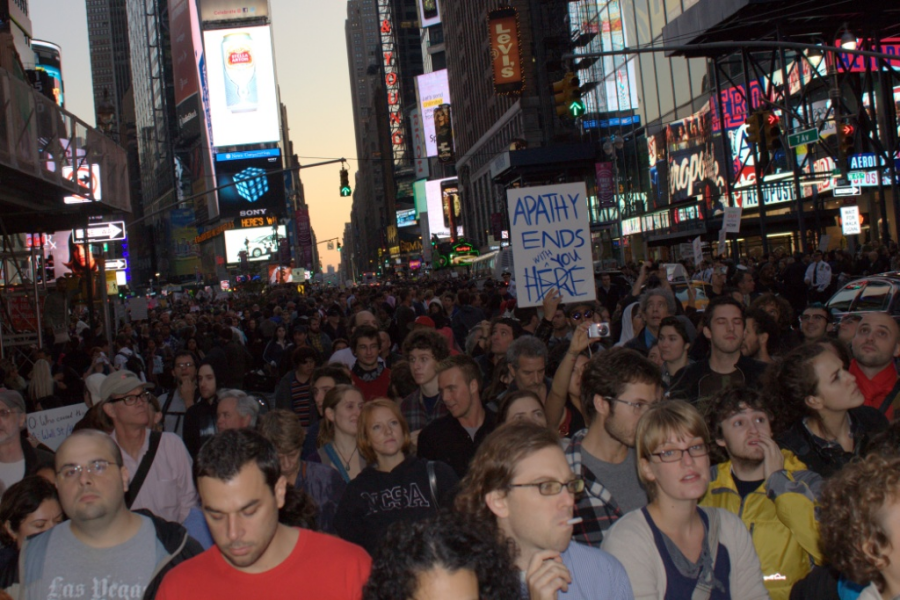
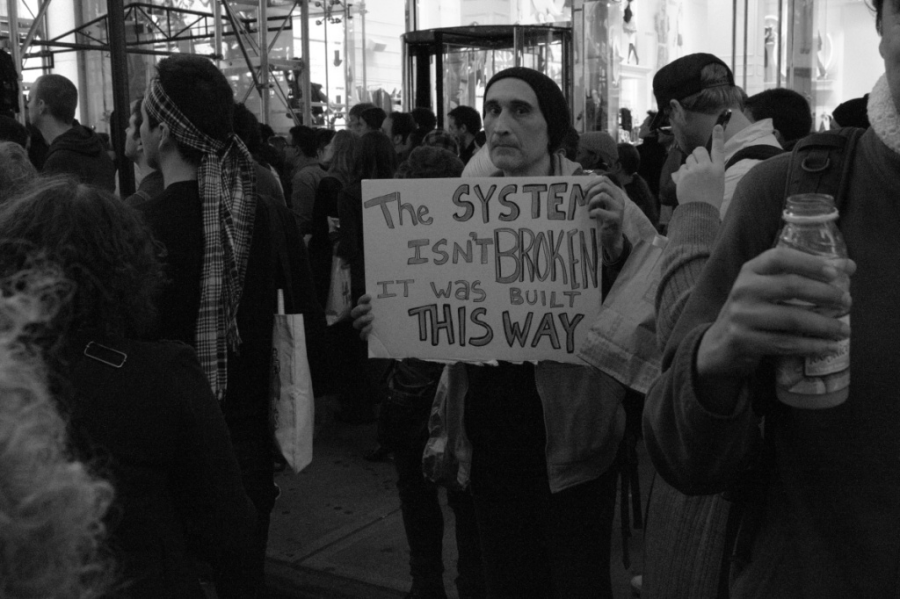
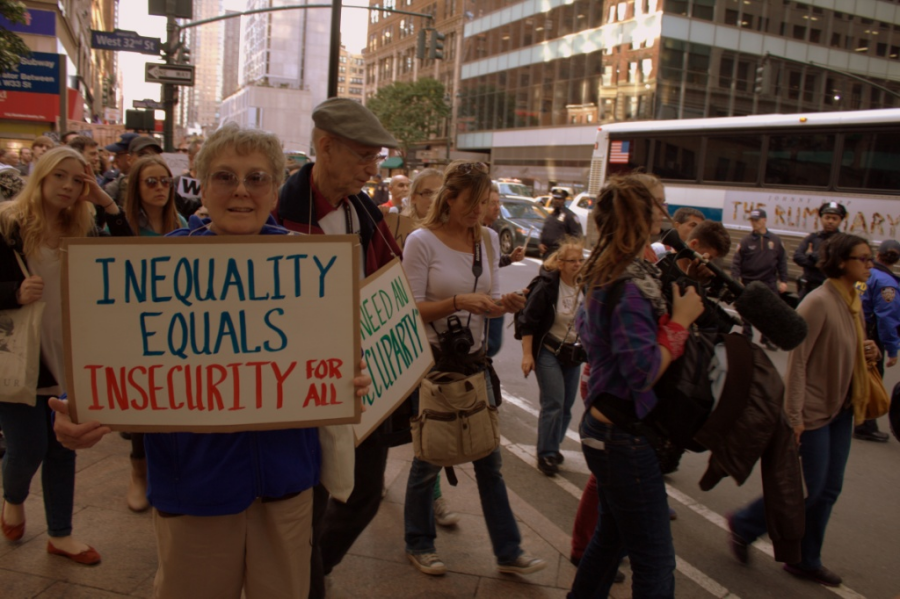
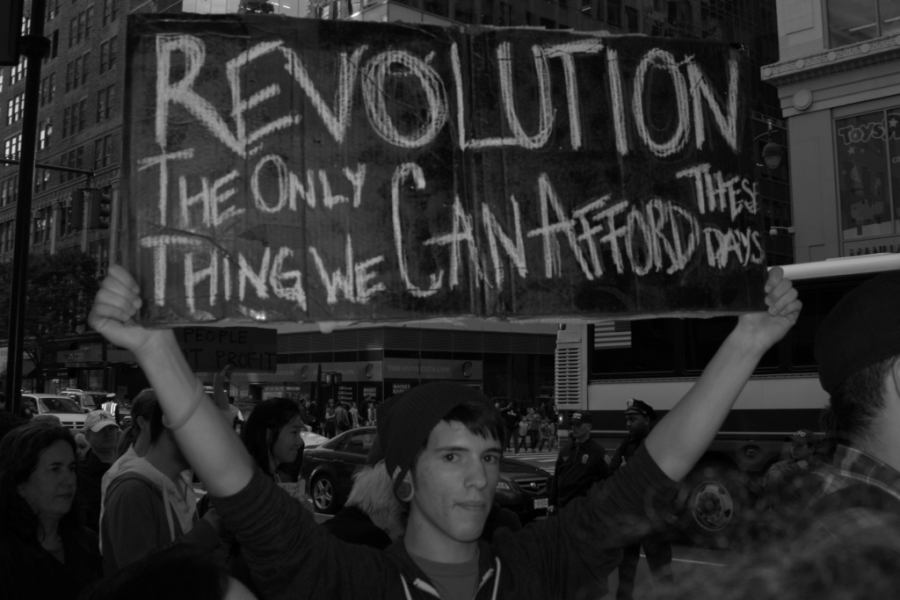
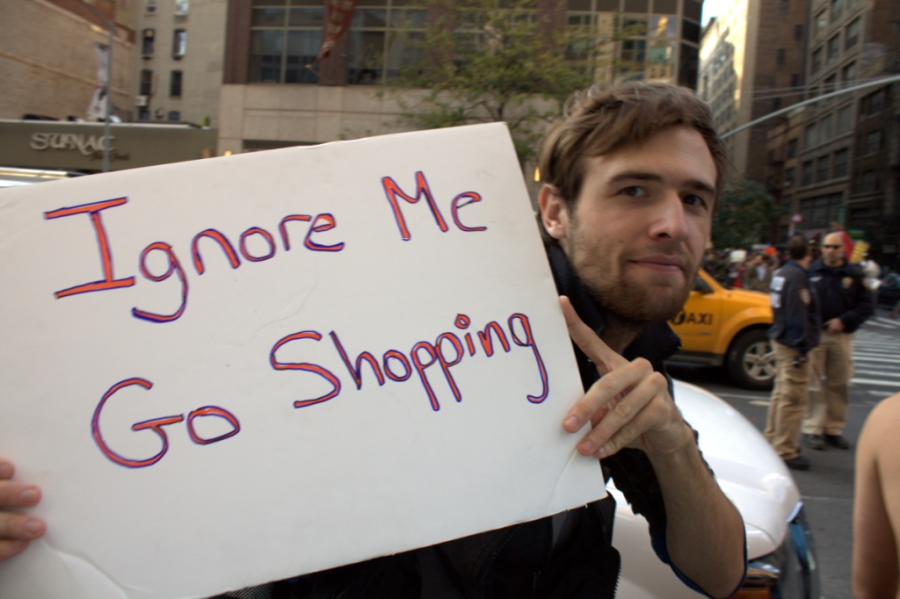
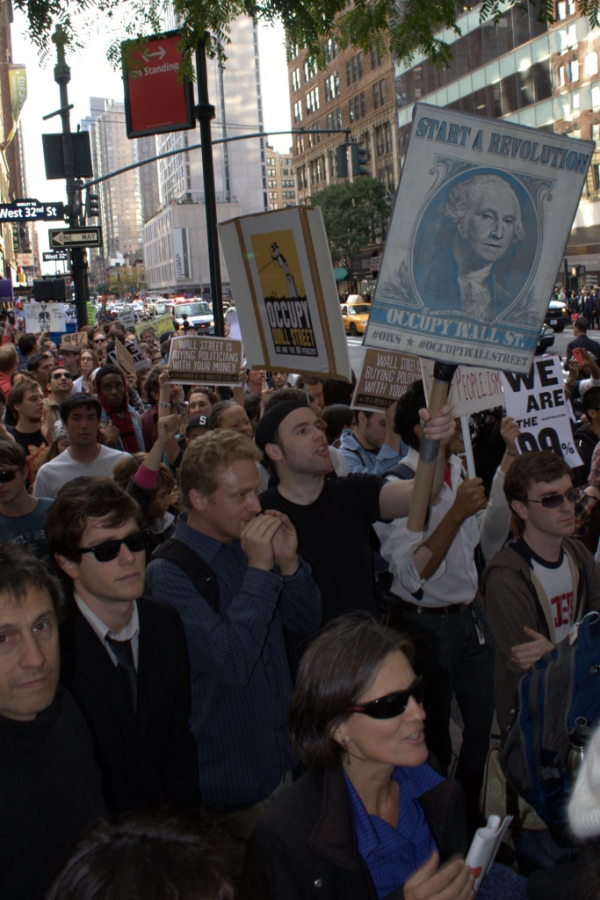
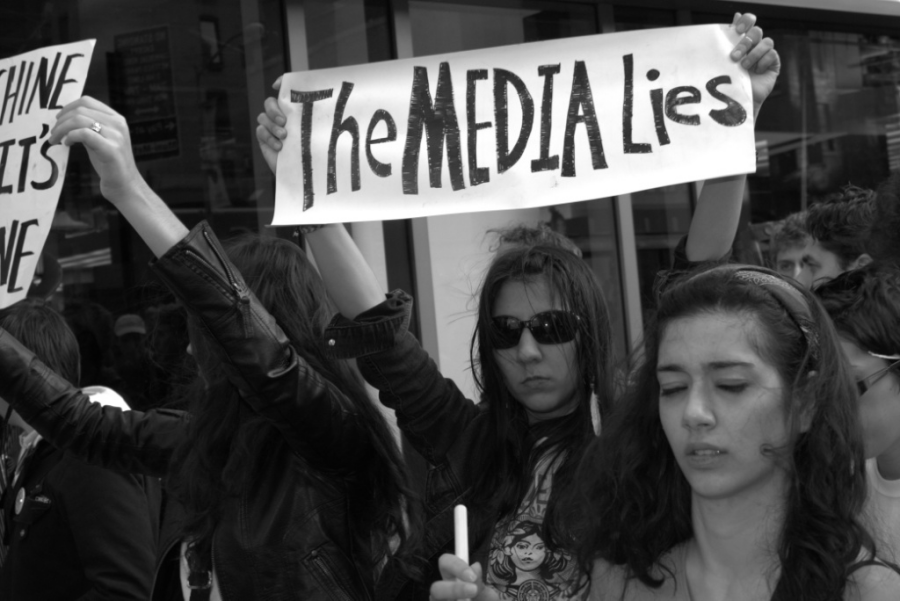
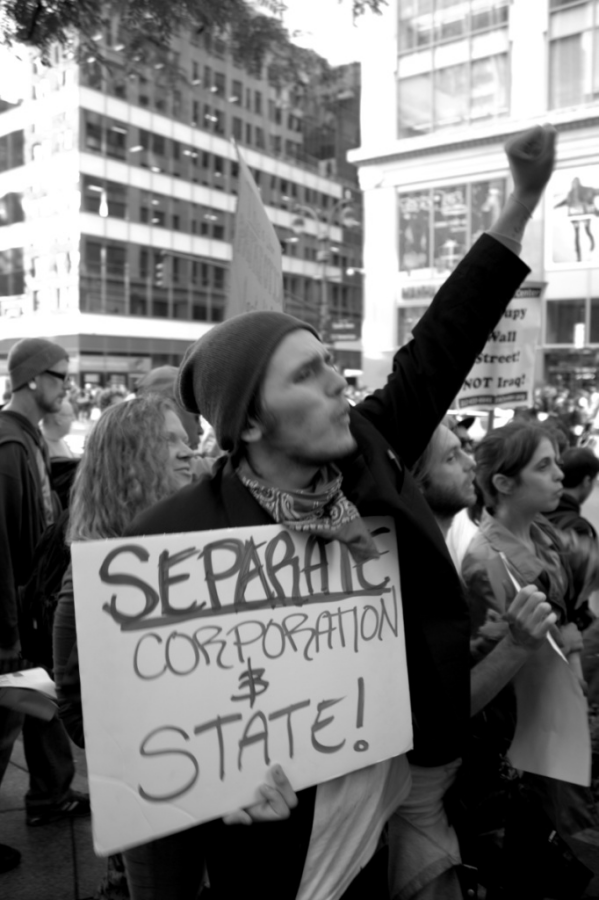
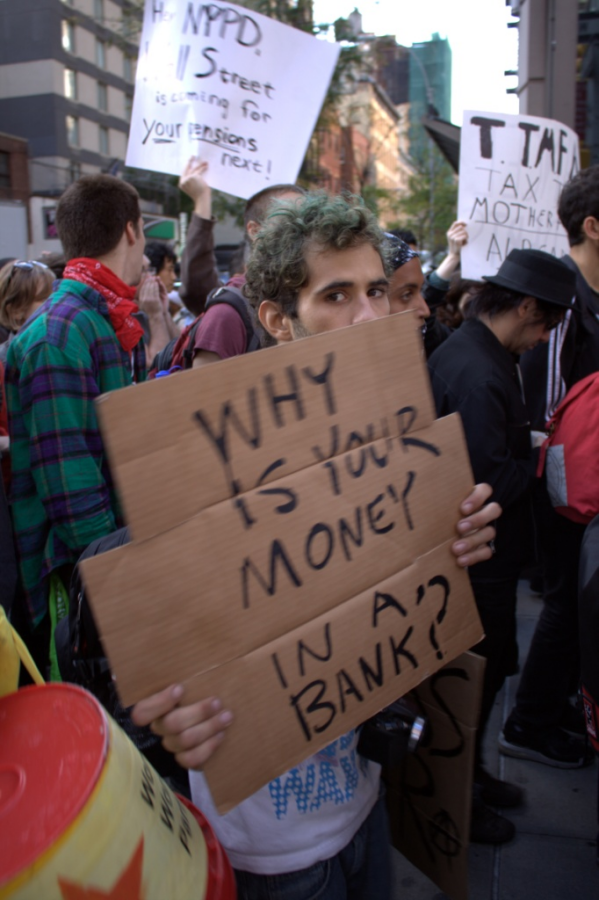
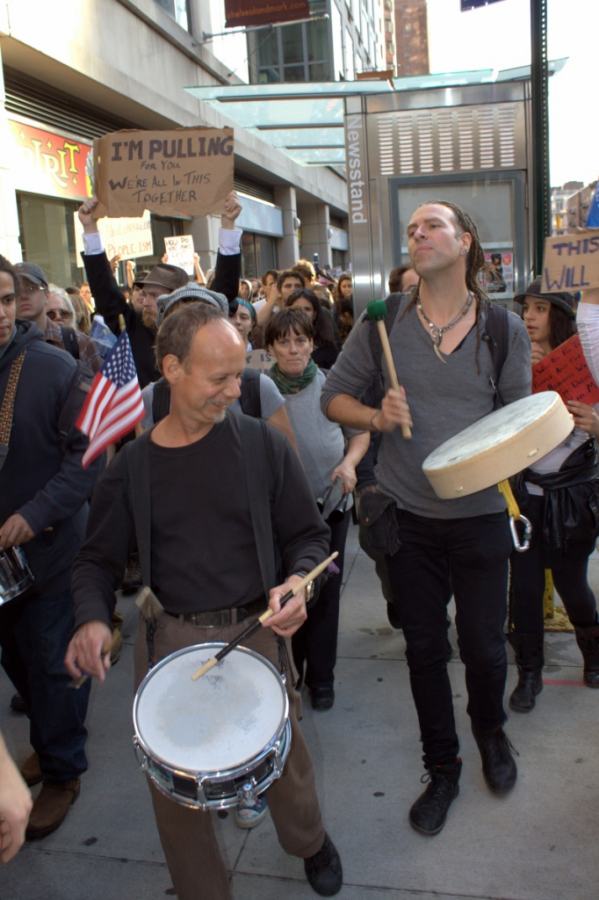
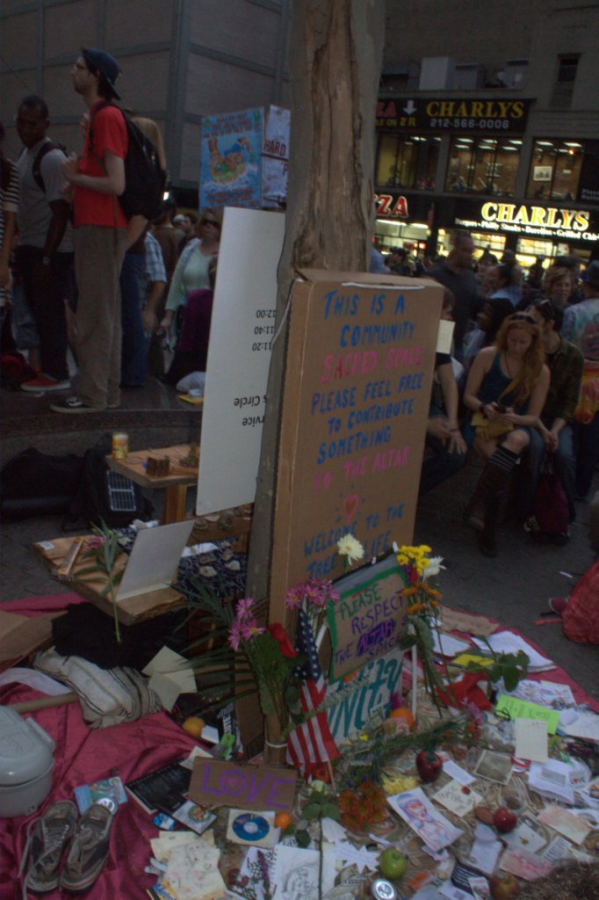
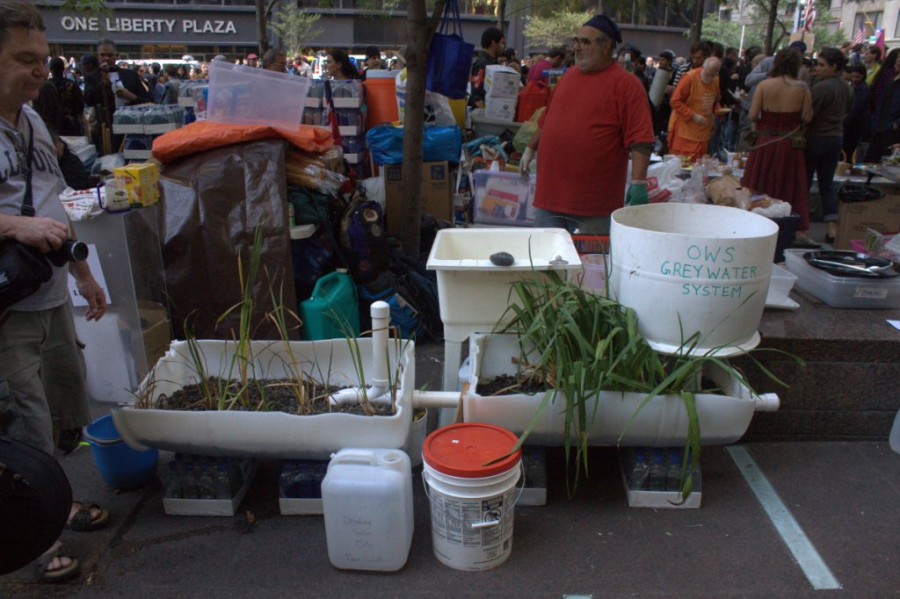
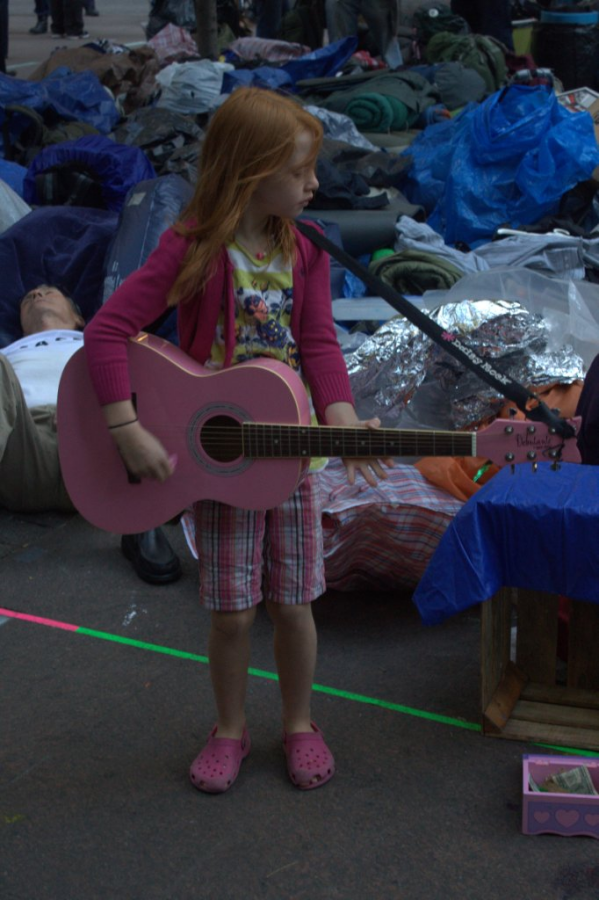
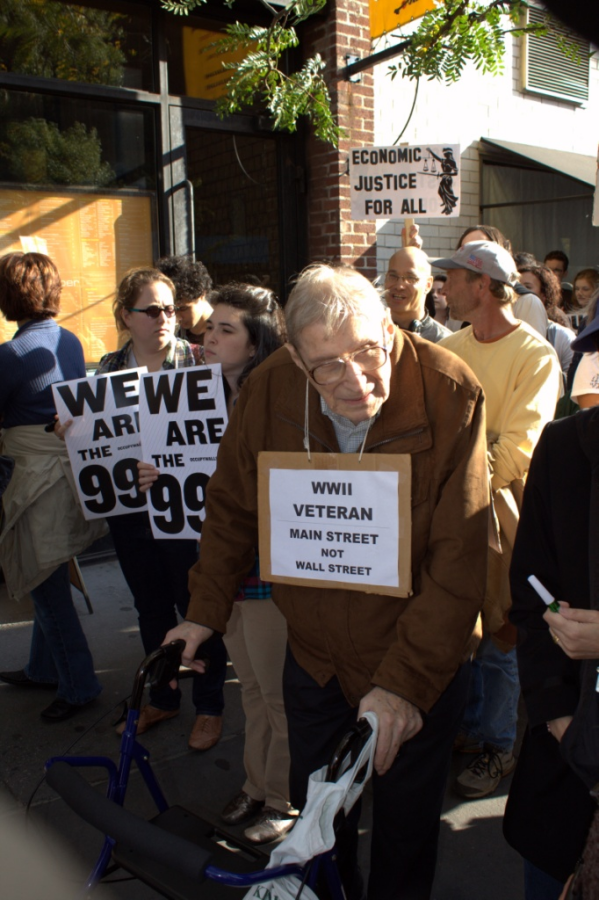
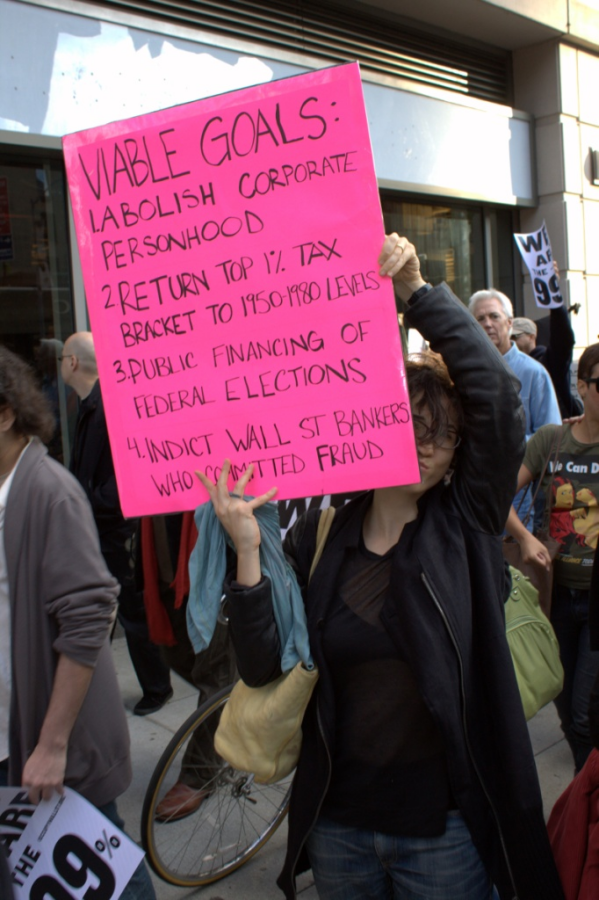
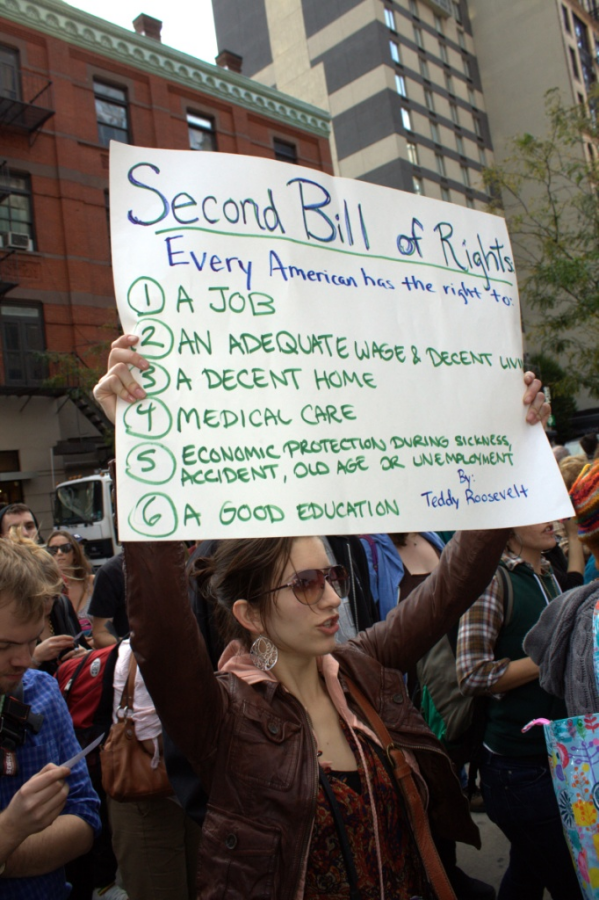
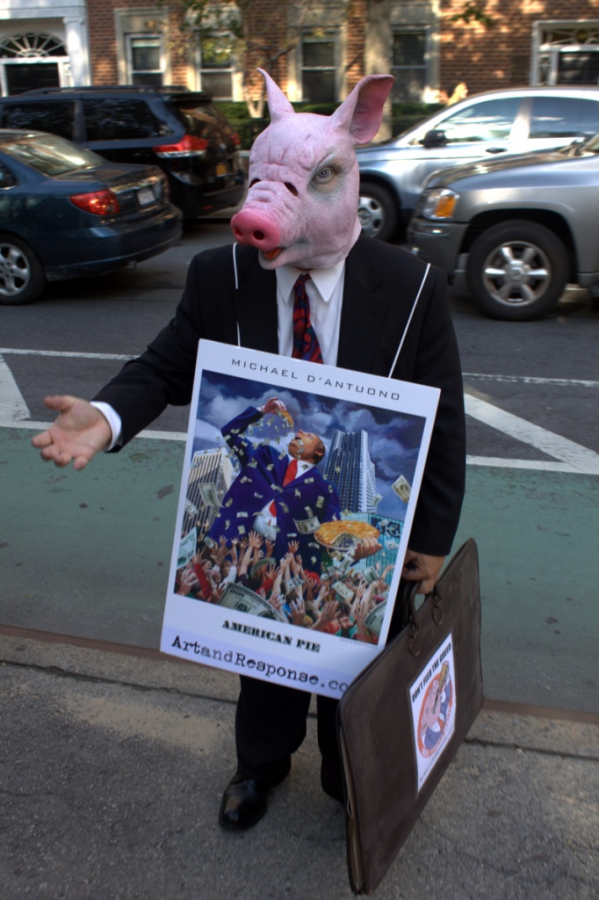
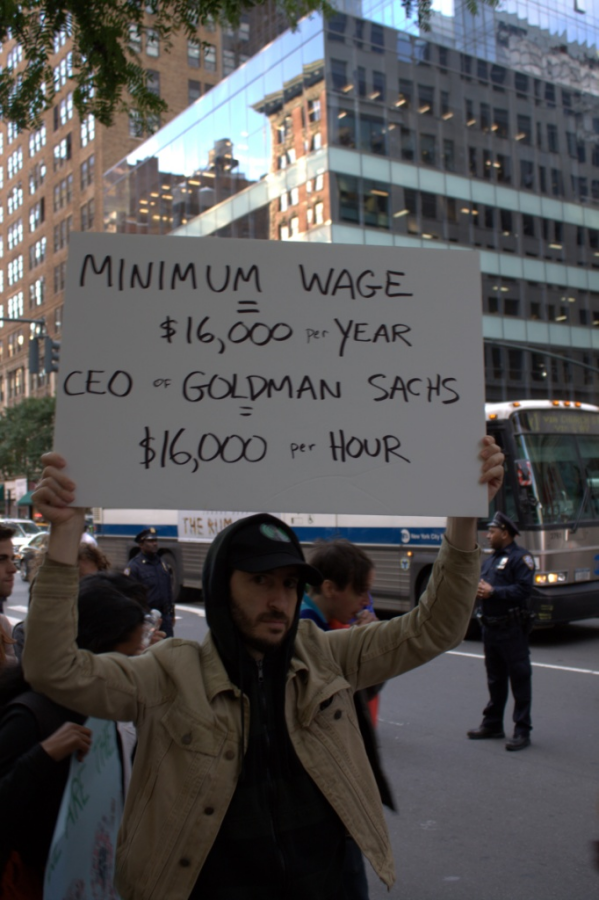
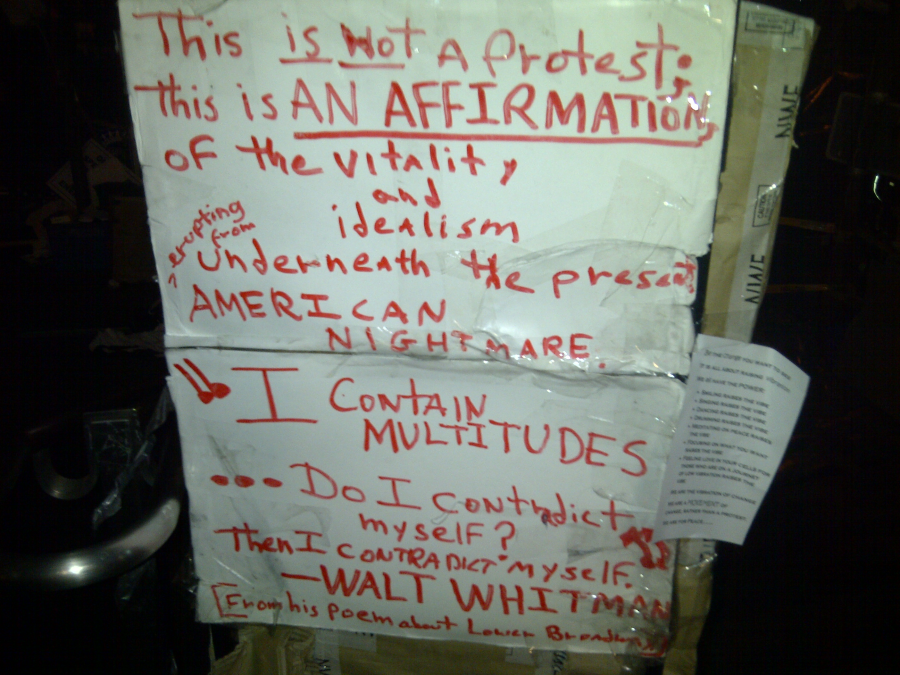
Well sports fans, I'm still sick -- somehow. Your guess is as good as mine. I've been directing what little energy I've had towards the completion of a few different long-term projects (and to answering email, Formspring questions, reader comments, etc.) so I'm once again short on a substantial update. Fortunately, shutterbug and patriot James is stepping in to give us a close-up look at the Occupy Wall Street protests that have been making the headlines lately. Most are thumbnails; click to see higher-res versions!


I've taken an interest in greywater systems ever since moving to the Quaker Farm. It's some interesting (AND EXTREMELY PRACTICAL) stuff.


"I'd occupy HER Wall Street," a friend commented when I showed him this photo. (Only he didn't say "Wall Street.")


"INFINITE GROWTH IS NOT POSSIBLE ON A FINITE PLANET."

"INFINITE GROWTH IS NOT POSSIBLE ON A FINITE PLANET."


This would be the Zuccotti Park you've heard so much about.


For the correlation between foreign wars and economic injustice, please see Martin Luther King's "Beyond Vietnam" address.


Correction: It was actually FDR.


However good its author's intentions, this sign is mistaken. The quote is from Whitman's "Song of Myself," which (as the title might suggest) is not about Lower Broadway. If Walt does have a poem about Lower Broadway to his name, I'm having a hard time finding it. There are these two pieces, but they're obviously not what the person drafting the sign had in mind.

Friday, October 21, 2011

#occupymuseums: Counterpoint

i just read your blog post on occupy museums and was going to comment there, but it seems that i can't from my work computer, so i thought i would email you my response. i was actually really surprised that as a maker of creative work who so far has not been completely embraced by the mainstream, you could reply in such a forcefully condescending way to the issues raised. of course you are entitled to your opinion and i completely understand what you are saying about how this reflects on OWS as a whole. and admittedly, getting in the faces of innocent museum visitors is not the most effective way to get a message across, i agree there. but i thought you might be interested to hear the thoughts of someone who has worked in museums but who also agrees to some extent with the issues raised by these protesters.

to begin with, of course the manifesto itself is flawed, but a lot of what OWS churns out is rushed and flawed; there isn't time to workshop these statements too much. the sentiment, however, is worth listening to.

museums have always existed to help educate and create models of sociability for people (i can cite my primary sources here if you'd like), and they are not making good on those responsibilities in this very crucial moment (this has been going on since the rise of late capitalism in the 80's, actually, but it is more important now that it has ever been before for museums to listen up, as there is so much momentum being generated by people speaking out against the capitalist machine and all of its far-reaching effects). when an important swath of the art being made today is responding to shitty socioeconomic conditions in an activist-inspired manner, museums--and here i'm talking about institutions that exhibit contemporary art, such as MoMA--should not only be planning blockbuster shows featuring established artists (who likely have workshops and apprentices creating their art for them). museums should be listening to their surrounding communities and finding ways to work into their agendas art that speaks to contemporary social needs, so that they can provide forums for relevant discussion as well as valuable models of sociability for their unmoored constituents.

naturally, museums have a hard time turning a profit, due in large part to a lack of federal funding--which is in no way the fault of museums themselves (MoMA and the Guggenheim are notable exceptions in that respect). thus, one deduces, they have to put on blockbuster shows and hike up their admission fees. however, i don't think that's the entirety of what these protesters rail against (and with a bit more thought, i wish they would have been more eloquent about this point). the art world--like the publishing world, like the music world; we all know this is happening in every creative field--has created a celebrity system, in which art dealers, financial backers, (some) artists, and hotshots on the boards of museums rake in most of the profits, leaving museum programming, maintenance, administration, etc., to suffer. that is something that those who are higher up in museums could do something about, but it is taken as a given part of museum structure and left in place. if anything, many people working within the structures of museums hope to get to the point where they are the ones at the top reaping the benefits, leaving the needs of their constituencies to be dealt with by those at the bottom (idealistic, passionate, and underpaid), who have no control over what ends up being shown and how the museum communicates its image.

yes, these protesters could band together to put on small group shows or something along those lines, as you suggest (assuming they haven't already been doing that, though i imagine that's a road they've been down...), but that is not only an almost impossible way to get one's message across on a broader scale--who, after all, besides the artists' artist friends would pay attention?--it is also reifies the existing structure in which established museums are off the hook when it comes to showing art that reflects how many of their constituents actually feel.

yes, it is hard to take something like art seriously when there is so much else at stake right now (careers, lives, basic freedoms), but blowing this off as some whiny kids who feel entitled to have their art shown in public is ignoring an important symptom of our society's deplorable condition. with art education chopped from public schools at an alarming rate, we should at least be able to depend on museums to help us build our identities through cultural expression.

full disclosure: i've been slaving away over a phd program application these past few weeks and had been making zero headway on my personal statement until reading about the occupy museums movement, the basic sentiment of which (the unfulfilled social responsibility of cultural institutions) has always been at the heart of my academic research. so i have a whole mess of emotions tied to all of this and i'm sorry if that becomes increasingly evident as my rant goes on. but i stick with what i said, though i respect that people who are passionate about seeing OWS succeed could see this splinter movement as a hindrance. OWS and OM (does that work?) are not completely parts of the same whole. but they are related and i wish more people would give that connection the time of day.


Hmm.

Thursday, October 20, 2011

#occupymuseums: An Excercise in Imbecility


This is exactly the sort of thing I was hoping the Occupy movement would not get itself into. An #OWS splinter movement (apparently with the approval of the main group) is sticking it to the Man at one of the main nerves of his plutocratic body politic: ART MUSEUMS.

Wait, what?

Let's try to wrap our heads around this one by taking a gander at Occupy Museums' call to action/manifesto:

The game is up: we see through the pyramid schemes of the temples of cultural elitism controlled by the 1%. No longer will we, the artists of the 99%, allow ourselves to be tricked into accepting a corrupt hierarchical system based on false scarcity and propaganda concerning absurd elevation of one individual genius over another human being for the monetary gain of the elitest of elite. For the past decade and more, artists and art lovers have been the victims of the intense commercialization and co-optation or art. We recognize that art is for everyone, across all classes and cultures and communities. We believe that the Occupy Wall Street Movement will awaken a consciousness that art can bring people together rather than divide them apart as the art world does in our current time…

Let’s be clear. Recently, we have witnessed the absolute equation of art with capital. The members of museum boards mount shows by living or dead artists whom they collect like bundles of packaged debt. Shows mounted by museums are meant to inflate these markets. They are playing with the fire of the art historical cannon while seeing only dancing dollar signs. The wide acceptance of cultural authority of leading museums have made these beloved institutions into corrupt ratings agencies or investment banking houses - stamping their authority and approval on flimsy corporate art and fraudulent deals.

For the last few decades, voices of dissent have been silenced by a fearful survivalist atmosphere and the hush hush of BIG money. To really critique institutions, to raise one’s voice about the disgusting excessive parties and spectacularly out of touch auctions of the art world while the rest of the country suffers and tightens its belt was widely considered to be bitter, angry, uncool. Such a critic was a sore loser. It is time to end that silence not in bitterness, but in strength and love! Because the occupation has already begun and the creativity and power of the people has awoken! The Occupywallstreet Movement will bring forth an era of new art, true experimentation outside the narrow parameters set by the market. Museums, open your mind and your heart! Art is for everyone! The people are at your door!

Okay. Right.

Since I am once again short on time this evening, we'll just be looking at a few quick points.

1.) If the artists of the 99% don't want to deal with a corrupt hierarchical system based on false scarcity and propaganda concerning absurd elevation of one individual genius over another human being for the monetary gain of the elitest of elite, they can just, you know...find other places to exhibit their work. Small urban galleries, perhaps? Public parks? Universities? The Internet? How about their own apartments? They could clear the furniture, distribute flyers, hang work on the walls, hand out wine and cheese on platters. That definitely seems like a more constructive use of their time to me.

This immediately strikes any reader who isn't a struggling artist himself as a personal gripe disguised as a political statement. "The false hierarchy of the cultural wing of the oligarchical puppet state won't exhibit my work, so their very existence must be wrong!" One might also suspect them of hitching a ride on a highly-publicized political movement to buy themselves some media attention.

2.) For the past decade and more, artists and art lovers have been the victims of the intense commercialization and co-optation or [sic] art, he says. How? This is not exactly a self-evident statement. Details, please? Explanations? Examples??

(When a truly persistent artist finds no market for his work, he takes it elsewhere instead of trying to burn down the market.)

3.) Why the fuck are you protesting the MoMA, of all places? It's not exactly turning tremendous profits. In fact, last I checked, it barely breaks even. What's these folks' beef, anyway?

An organizer tells a journalist that the place isn't necessarily bad, and the art isn't necessarily bad either, but he doesn't like having to pay $25 to get in.

The admissions price is a direct consequence of the MoMA's not receiving any government funding. Even if you want to put your fingers in your ears for the conversation about the United States' tremendous federal budget deficits and national debt, are you really willing to blame an institution for not wanting to exist at the mercy of Congress?

And before you bitch about its entry fee, why don't you go look at its membership plans? Hey, look! You can pay $75 a year for a membership, which allows you to support an establishment that offers great works of art for public viewing (which would probably otherwise be locked up in some billionaire's mansion), come and go as you please at no further cost, and bring a friend along at an 80% reduction in price!

Maintaining an art gallery of the MoMA's size ain't cheap. The "exorbitant" entry fees help pay for staff salaries, security, site maintenance, power (climate control is equally important for the art is it is for the comfort of the visitors), property taxes, etc. But that's what it costs to keep so many pieces by so many highly-sought artists under the same roof for public exhibition.

4.) The members of museum boards mount shows by living or dead artists whom they collect like bundles of packaged debt. Shows mounted by museums are meant to inflate these markets. They are playing with the fire of the art historical cannon while seeing only dancing dollar signs.

Oh! He played on the homonymity between the words "canon" and "cannon." Cute! (Or maybe he actually misspelled "canon" and I'm giving him too much credit.)

But still, what? I would think that an effective manifesto should give detailed reasons for a party's grievances than just assume everyone is already aware of them -- especially when they're so abstract.

5.) If you don't like the records the mainstream labels are releasing, stop buying them and look for music elsewhere. If you don't like what the museums are displaying and promoting, PATRONIZE DIFFERENT MUSEUMS. Better yet, start an art blog, find some like-minded contributors, and promote stuff that's beneath the museums' radar. (Something similar worked pretty well for a little music blog called "Pitchfork," didn't it?) This would also be much more productive (not to mention tasteful) than taking advantage of a public protest about economic injustice to draw attention to yourself.

6.) Okay, wait. Maybe what he's saying is that the wealthy have a disproportionate influence on what's hot and what's not in the art world. Probably -- but first of all, that's nothing new. If you're in the business of art and want to make money, you make art that appeals to people who have money. Otherwise, you make art for the love of it and be grateful for the chance to do it. And secondly, who gives a crap? Find different patrons, go to different museums, blah blah blah.

Economic injustice is a matter of widespread concern because all aspects of a nation's life exist in the context of its economic state. This is why #occupy is important and necessary. Not being able to find a job after ten months of looking is a pretty good reason to take to the streets. Not being able to see your and your friends' paintings on display in the Museum of Modern Art because of the pyramid schemes of the temples of cultural elitism kind of, well, isn't. And it's really no reason to get in someone's way and make a lot of noise when they're taking the day off to visit the MoMA with a friend from out of town. That's not going to endear them to your cause, and it certainly won't make them look at #occupy in a positive light.


I wouldn't care about this in the least if it didn't reflect so poorly on #occupy as a whole.

The Occupy movement actually seems to be endorsing these people, which has the potential to be extremely counterproductive (provided Occupy Museums doesn't just fizzle out in a week). If #occupy wants to affect serious policy changes, it needs mainstream support, and not just the reliable backing of the young and far-left. Frivolous side-projects like Occupy Museums only add discordance to a movement that already receives enough criticism for its lack of a unified message and set of actionable demands. (Side note: a specific demand may be forthcoming.)

Having an #occupy endorsement stamped on self-indulgent abstractia like Occupy Museums just provides the CNN and FOX News personalities with ammunition. It exposes the movement to ridicule after all the work it has done to demonstrate that it represents more than just the usual protest crowds (kids, hippies, academics, privileged hipsters, etc.).

I brought this up on Occupy Wall St.'s Facebook page earlier today, but it scrolled out of sight within ten minutes. One response I got (before my post was buried) went like:

We really don't care if msm takes this seriously. Our seriousness isn't dependent on their interpretations

No, but your results are. Unless you want all your time and effort to amount to nothing more than a three-month street fair, you damn well better care how the wider public perceives you.

Occupy needs to stay on message. Economic Injustice. Economic Injustice. Economic Injustice.

The movement can't afford to be defined by the pet causes of its fringe elements -- I seem to recall something like that happening to the Tea Party around the same time it began to sink out of favor with the silent majority. Once the public begins tuning out #occupy as a bunch of manifesto-touting, overacademized weirdos, the conversation will change, policymakers will turn their attention elsewhere, and that will be that. And I don't want this to happen.

Friday, October 14, 2011

Words for a debt-free college senior

This has been making the rounds on the Face-Book tonight and I find it really irritating.


(2:12:06 AM) pitchyfork: i wish i could tell her she's missing the point.
(2:12:50 AM) lakenessmonster: i wish i could make her black.


It's late and I don't want to turn this into a dissertation, so just a couple of points. 

1.) Despite presumptions to the contrary, the "99%" crowd is not asking for a free ride. Any of them who are certainly deserve censure, but they do not compose the majority. It isn't that these people don't expect or want to work hard. (I've visited the demonstrations. The staffers are working very hard.) They don't believe everything should be handed to them, either. What they want is a more even playing field. What they want is the personal accountability that this girl flouts to apply to the people who crashed the economy and brought the national underemployment rate to 20%. 

2.) In times of economic turbulence, it often isn't someone's own decision whether they are successful or unsuccessful, employed or unemployed. When the mass layoffs are announced and your name comes up, the executives probably won't care how hard you work, what you've contributed, or how many hours of overtime you put in. They see only a job title, and they put the axe to it.

3.) She's still in college. In case she hasn't noticed, a whole bunch of these Occupy Wall Street kids are college graduates suffering from long-term un/underemployment. I'm sure many of them had excellent grade-point averages and worked between classes, too. It doesn't seem to have helped them find gainful employment or pay off their loans. (Not everybody is able to secure grants, sister.) 

4.) Wait a second. Owns a car, pays for gas and insurance, pays rent, buys food, school supplies, basic amenities, etc. -- working thirty-something hours a week and earning "barely above" minimum wage. Where the fuck is she living, because I want to move there. Where I'm from, forty hours a week on minimum wage buys you someone else's couch to sleep on. 

5.) I would be very interested in knowing her economic background. Could her family afford to send her to SAT prep courses? Did she live in a wealthy neighborhood with a correspondingly well-funded public school system? Did she perchance come from a one-parent home in which she was expected to contribute to the household finances (hah!)? Can she be assured of her family's financial backing in case she loses her job and can't find another? 

6.) "Getting by" in the wealthiest nation on the planet should not require leading a life without ever making mistakes, nor should it require a superhuman effort. I don't think this is a particularly radical or unreasonable statement.

7.) Not to sound spiteful or cruel, but I sort of hope her employer decides to reduce payroll hours, putting her down to 20 hours a week at "almost" minimum wage. Then I hope she totals her car and has to have extensive surgery on a severely fractured leg. Going into debt isn't always a choice, kiddo. 

8.) If she doesn't understand why some people might be cranky about having to work two jobs to keep a roof over their heads and pay off their medical bills while their bosses' bosses get to pick which mansion they want to spend the summer in, she really needs to go back to school.

Monday, October 10, 2011

#occupywallstreet: Arguments, Ruminations, Photographs

As Occupy Wall Street endures, so too does the "web blog sphere" chatter about Occupy Wall Street. If you're sympathetic to the movement (I think it has lasted for a sufficiently long time, attracted enough supporters, and spread to enough cities that we can appropriately refer to it as a "movement"), you will not mind. If you're trying to tune it out, I'm afraid you'll have to put up with it for at least a little longer.

The fact that Occupy Wall Street is calling attention toward a fundamentally broken component of American society is reason enough to at least pay attention to it, even if you can't totally support it. After all, the United States is a nation that doesn't snap out of its mass media and toy-induced coma very often, and this is especially true of its young people. The "Occupy" movement suggests that maybe Generation Y does in fact have a pulse, and despite whatever reservations I might have about the demonstrators' means and ends, what we're seeing is definitely preferable to watching the thousands of them shrugging, going back inside, and tweeting their minute-by-minute reactions to the new episode of Jersey Shore.

Yesterday (Sunday) afternoon I stopped by Zuccotti Liberty Park with James to drop off some food, clothing layers, and bedding for the campers before heading back toward Pennsylvania. Apart from mentioning the almost unbelievable increase in the demonstrators' numbers since my first visit, there is little I did or observed that some other local blogger hasn't already discussed himself, or that the photographs James has been taking throughout the week (some of which you can see below) can't illustrate with less verbiage and more eloquence.

Right when Occupy Wall Street began making the news about two weeks ago, my friend Jen and I shared our views on the matter over dinner at a Vietnamese restaurant, and really got on each other's nerves. It spilled out into an email exchange that tapered off after we both got tired of being mad at each other, but Jen did raise some points to which I never had a chance to respond. I'd like to take a look at a few of them here -- but it bears mentioning that this isn't a case of me wanting to pick a fight and revive a disagreement (sup Jen). I just think some of Jen's points make useful starting lines for discussion.

Let's begin! 

Most of the corporations out there are providing commercial products/services or are supported by the public in some shape or form.

Again, personal responsibility.

It's good that they're out there voicing their opinions and making their concerns heard, but they probably don't consistently patron companies that are socially and economically responsible. If they did, these companies wouldn't be struggling to make a profit and this whole corporate-greed thing wouldn't be a problem.

Before we start looking at the legitimacy of her main point, I have a bone to pick about the "personal responsibility" chorus. Why should it only cut one way?

I worked at a Borders store for three years. When the company started having financial troubles, employee hours got cut; the worse things got, the less we worked. Perks were systematically eliminated. There was a "temporary" freeze on employee wages that ended up lasting for the remainder of the company's existence.

This in itself isn't the reason why many former Borders employees are so bitter. After all, when money is tight, everyone in the house has to make sacrifices. But in this case, it was the store employees who were made to absorb the splashback resulting from executive incompetence.

My friend Anna (a former member of the management staff at Borders' King of Prussia Mall location) can give us a few names and numbers, since her ear was much closer to the wall than mine:

(11:27:19 PM) annatheclamma: hmmmmmm
(11:27:22 PM) annatheclamma: well
(11:27:58 PM) annatheclamma: I think our wage freeze started in 2007
(11:28:18 PM) annatheclamma: in that time, we had george jones as a ceo
(11:28:28 PM) annatheclamma: who got ousted, but got a bonus when he left
(11:28:32 PM) annatheclamma: then ron marshall came in
(11:28:43 PM) annatheclamma: got a bonus upon being hired, and one upon being fired
(11:29:06 PM) annatheclamma: then mike edwards came in, who got a bonus with the promotion, and a severance package even after the bankruptcy
(11:31:09 PM) annatheclamma: I know everything was filed with the sec
(11:31:50 PM) annatheclamma: mike edwards got 125,000 in severance
(11:32:27 PM) annatheclamma: wait the top 4 execs each got $125,000
(11:32:32 PM) annatheclamma: just in severence
(11:32:47 PM) annatheclamma: from a bankrupt company that gave its workers nothing in severance
(11:33:51 PM) annatheclamma: george jones got 2.09 million in severance
(11:35:05 PM) annatheclamma: I was there for 5 years and made $10.75 an hour
(11:35:10 PM) annatheclamma: completely fair

Why do I get the feeling practices such as these aren't especially unusual, given how similar it sounds to reports of lavish post-bailout bonuses across the financial sector? And why is it that only the wealthy are allowed to lecture the lower classes on the issue of personal responsibility?

But we've already veered from Jen's main point, which was about how it is upon the concerned consumer to patronize the right businesses and eschew the "wrong" ones, and I cannot dispute this. Nor can I argue with the fact that we essentially voted in Exxon, Bank of America, and Wal-Mart, despite never actually pulling a lever for them in any ballot box. None of these huge corporations with questionable ethics would have ever made it big unless large numbers of people hadn't willingly directed portions of their incomes toward purchasing their services or swag.

Participating in public demonstrations, getting the word out, making yourself heard, and, yes, even voting in public elections are all important toward creating the momentum that carries reform.

But all of these are relatively easy and quick methods of trying to foment social change -- and real change is never easy, and it most certainly isn't quick, especially not where systemic reform is concerned.

A tremendous majority of the population adheres to a lifestyle that pumps money into the coffers of multinational corporations, many of which don't necessarily behave in ways a responsible, respectable person should be expected to. (If corporations want to be treated as "entities," i.e., people in our legal system, I see no reason not to hold them to the standards to which we hold any United States resident.)

We can bitch about the evils perpetrated by oil companies, but our whining doesn't make a difference if, for all our righteous umbrage, we're driving fifty miles back and forth to the office every day and taking the car to cover any distance greater than half a mile. We can lament the decline of the manufacturing sector, the death of locally-owned shops, and the rise of wage slavery, but our grievances ring hollow when we willingly support businesses like Wal-Mart (which contribute to these problems) out of frugality or convenience. 

Smaller retailers exist, just like better companies do. You and most Americans are too lazy to seek them out, or refuse to spend extra money to buy them. It's not worth your effort or the inconvenience to look on the internet for a small bookstore (despite your claims, they do exist - like the Strand, and a couple of ones in New Brunswick, there's one that i go to in Watchung Plaza), research the companies that you choose to buy products from, or utilize the services of many smaller independent companies on the internet, but its easy to blame the worlds woes on something bigger and more powerful than you.

I actually think this speaks for the necessity of the changes for which Occupy Wall Street's anti-corporate core is pushing.

Let's say you're living out in the suburbs somewhere. You want to buy a new pair of shoes, but would also like to keep true to your newfound sense of social responsibility. You establish a small set of criteria for the shoes you buy and the store from which you buy them. First, it is necessary that you can be completely positive that the shoes were not assembled by child laborers or sweatshop workers, and you would also prefer that they were made in America. You consider yourself an environmentalist, so you want to invest in a company you can be assured isn't just offering consumers a shallow "we've gone green!" platitude and is actually taking significant, proactive steps toward curbing their emissions. And since you yourself are an unpaid intern, a retail worker, or are attending graduate school, it is no less important that these shoes are affordable.

So: where do you go to buy these shoes?

Even if somebody wants to adopt more responsible purchasing habits, it is EXTREMELY difficult to practice them. Finding an accessible business that's committed to screwing over as few people and leaving as small an ecological footprint as possible can be flat-out impossible, unless you happen to live in a major urban center.

("Where do you find them? The Internet, duh!" someone has suggested. Hm. Well, remember that we are making our imaginary purchase as environmentalists trying to minimize our carbon footprint, and the jury is apparently still deliberating the emissions output of a shopping trip vs. the emissions output of home delivery, but excellent point. That duh was well-deserved.)

On Sunday evening, James recounted an argument he had with someone who got a kick out of pointing out that he supported Occupy Wall Street despite keeping a checking account with TD Bank, carrying a BlackBerry in his pocket, and stopping by Subway for lunch. James argues that there is no double standard: he can patronize particular businesses, he argues, and still lobby for tightened regulations and business reform. This makes James something of a moderate within the Occupy Wall Street ideological spectrum: he doesn't believe the whole commercial landscape needs to be altogether bulldozed, but nevertheless requires some overdue pruning and edging.

But let's assume James is incorrect, and the only ethically consistent path of action is for him to withdraw all his money, cancel his credit cards, get rid of his phone, eat only organic, locally-prepared foods, patronize only locally-owned business, only purchase products that he knows were manufactured by companies concerned about human rights and environmental impact. What can he do? 

I'm sure there are people who would be fine koombayaa-ing around a campfire and hanging around drum circles in their free time, good for them. But you can't expect everyone to want to live like they did in the olden days in simple housing constructs eating vegetables that they pick from gardens that they grow themselves.

Individual conclusions will vary -- but if we really are looking at a binary choice, it seems tragic that it must be one.

I've met and spent time with a handful of people who, when faced with this one-or-the-other dilemma, chose The Other. These are the people who go completely off the grid. They drift, they join communes, they squat, they get their food and clothes from dumpsters. In brief, they effectively sever themselves from society. They can't "vote" with their dollars to support sustainable and ethical businesses because they have no money. No mainstream politicians represent their interests. They are pretty much excluded from public discourse; after all, who cares what some dirty, dreadlocked bums have to say about anything?

We have wandered into a point where we are essentially required to support multinational, profit-fixated, too-big-to fail businesses in order to participate in mainstream culture. When the thinking man's pair of alternatives is either enduring the prickings of his conscience (which consumer spending can nicely numb) or self-imposed exile and asceticism, what's the easier choice to make? (Thus, we call the ones who make the hard choice "crazy people.")

The media has been mentioning an announcement made by Occupy Wall Street's "organizers" -- even though, in reality, the person responsible is not affiliated with OWS's planners and corrallers -- encouraging supporters to simulataneously withdraw all their money from the Big Banks on November 5. I'm not sure precisely how much the banks might stand to lose from something like this this (it's not as though the people supporting Occupy Wall Street control a big slice of the national wealth, which is sorta why they're protesting to begin with -- but never mind that), but let's say, for argument's sake, that for some reason enough people do cancel their checking and savings accounts, taking enough money out of the banks to do them some serious damage. (Again, this is not likely.)

What would happen then?

Probably nothing good. Shockwaves would diffuse throughout the economy; companies enact another round of layoffs, consumer spending decreases, more companies begin laying off more people as a result, the stock market plunges, wealth is lost across the board, and the threat of a double-dip recession stops being just a threat. (Or maybe nothing happens at all? Who knows?)

But we'll imagine that this is a real and likely possible result if enough people follow through and stop patronizing the Big Banks on November 5th. Upon first glance, threatening to derail the (agonizingly slow) economic recovery in order to make a point might seem irresponsible and perhaps even terroristic -- but remember that these people are not threatening the government, civil institutions, or the populace itself. They are threatening to stop patronizing a set of for-profit commercial institutions. Free market logic not only gives this sort move the okay, but actually encourages it: everyone has the right to take their business elsewhere, after all. This is one of the very pillars of our economic system.

But where are we when, by taking their business elsewhere, a crowd of discontented consumers could actually endanger the public good? (Remember Too Big to Fail?)

Something is undeniably rotten when we have to support certain commercial institutions in order to preserve the welfare of the state. It is equally vile that we must make a choice between patronizing these businesses or otherwise living on the fringes of society (if that is indeed the reality of the situation).

Economic inequality remains the issue on which Occupy Wall Street keeps its focus. But, really, this isn't just an economic problem: the culture itself is in need of reform. 

Granted, most corporations certainly need a massive slap in the face, but if those principles were applied to everything (even good businesses), there wouldn't be much of an incentive left to take risks and start a business if there's a massively oppressive cap to how much they can gain from it and if the chance of going bankrupt is dramatically higher.

Again, this implies the duplicitous narrative that only two alternatives exist: either business becomes almost totally deregulated and everyone gets to have money again, or else excessive and pointless regulations will make it impossible for anyone to ever make money again.

I refer to you a cartoon that has been making the rounds lately:

We've been imposing regulations and reforms upon businesses for years, and it doesn't look to me like business is doing all that horribly -- at least, not where the multinationals are concerned. It is more accurate to claim that excessive regulation can hamper small businesses, which is why regulation cannot be one sided: the legal reforms that compel businesses to behave more responsibly must be drafted, implemented, monitored, and, if need be, modified with the utmost diligence and responsibility. (After all, it is no less duplicitous to suggest that all regulation is necessarily helpful regulation.)

There is no recipe or guidebook for such procedures; no universally-applicable principle by which we can strike that balance between too much or too little regulation in every case. But it is counterproductive and pointless to squabble over whether it should be all or it should be nothing instead of putting in the difficult and necessary work of finding a suitable mean.

And now, in the interest of the public good, I am going to step down from the soap box and turn the rest of this update over to James and his camera.


More pretty pictures might come later. I'll point you toward higher-res versions as soon as James makes them publicly available.