Tuesday, November 15, 2011

#occupy Episode V: The Empire Strikes Back


Last night I went to sleep in a really foul mood. When I woke up, the first thing I did was check the news, so I began this morning in an even worse mood.

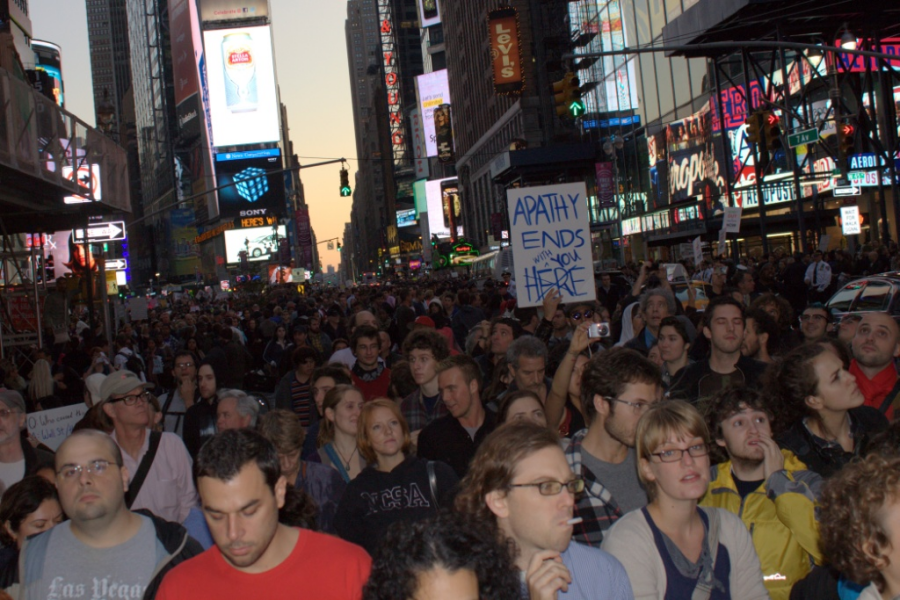
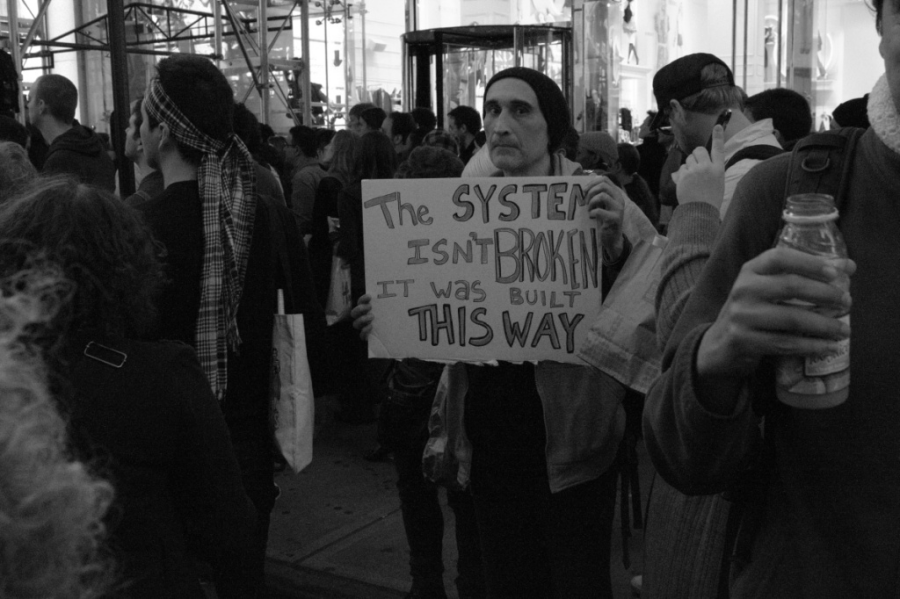
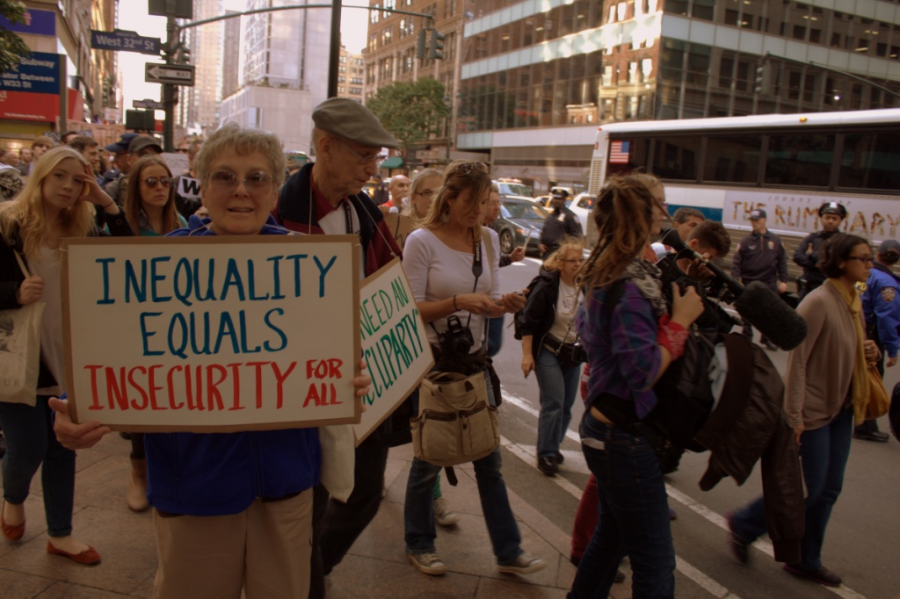
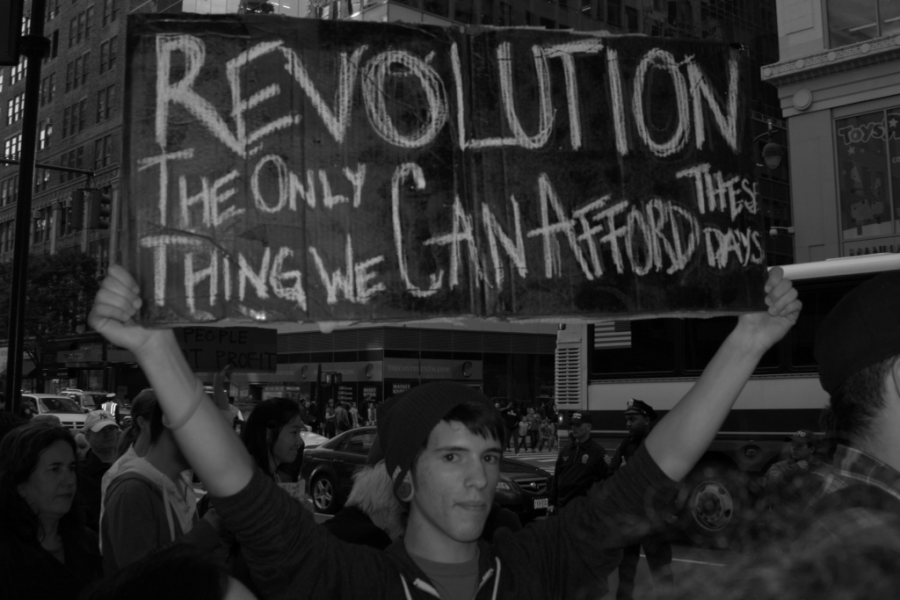
You've probably already seen the reports. You don't need to be told that Mayor Bloomberg and the NYPD brought the truncheon down on the Occupy Wall Street camp at Liberty Square last night.
Some weeks ago, when touring the park and dropping off some supplies for the campers, my friend James ominously stated that the NYPD's budget outweighs that of some smaller nations' sovereign military forces. The scene that began at around 1:00 a.m. was practically a YOUR TAX DOLLARS AT WORK exposition for the pleasure of New York's Republicans and sadists.

Nor should it be news to you that journalists were aggressively prevented from accessing the scene (and in several cases bullied) by the police, so most of what we know about the crackdown comes from Twitter, yfrog, and YouTube. You don't need to be told the stories of unprovoked beatings and gassings, wanton (hell, downright gleeful) destruction of protestors' property (tents and tarps were slashed, cameras and computers were broken, and I can only imagine how much donated food was chucked into the garbage trucks that pulled up to the park along with the police vans and sonic cannons), and the refusal of Mayor Bloomberg and the NYPD to comply with a New York City judge's ruling to allow protestors back on the scene.

You don't need to be told. All of this is old news. Every columnist, blogger, and interested social media user has already reported the facts and weighed in, leaving your present armchair correspondent with precious little to contribute. Nevertheless, I don't think I'll be able to move on from the subject and thinking about something else until I've tossed my two cents (well, three) into the distended coin purse of Internet discourse.

FIRST CENT: THE FATE OF THE LIBRARY

Scratch that. Contrary to previous reports, the famous Liberty Square Library has not been destroyed, which makes the diatribe I had prepared (and its exquisite allusions to Alexandria) totally unnecessary. This would make me feel so much better about the whole thing were it not for....

FIRST CENT: JUDGE STALLMAN AND THE FIRST AMENDMENT

This afternoon -- hours after a New York County Supreme Court Justice issued a restraining order against Mayor Bloomberg and the NYPD -- Judge Micheal Stallman ruled that the demonstrators' first amendment rights do not permit them to camp out at the park indefinitely, and that the police crackdown (bulldozers, pepper spray, batons, and all) was all good and legal. And just like that, Liberty Square has reverted back to Zucotti Park -- for now. Protestors are being allowed back on the site, with the proviso that they can't build another campsite.

There's a whole lot about this to make one feel scared and upset, but on the whole, the movement probably stands to make a net gain from this. Just when the American attention span was in danger of flitting elsewhere, and a month before the merciless New York winter threatened to move in and kill the movement slowly and ignominiously, the Liberty Square occupation goes out with a great sound and fury that shocks the whole world into tuning back in.

For the time being, public assembly isn't altogether banned -- and if the Occupy crowd can muster the tenacity we've come to expect from them, they'll back, tents or no tents. Bloomberg and the NYPD just giftwrapped them a reason to press forward, and here's hoping they rise to the occasion.

SECOND CENT: MAYOR BLOOMBERG'S BONEHEADED STATEMENT

"We have been in constant contact with Brookfield [the park's owners] and yesterday they requested that the City assist it in enforcing the no sleeping and camping rules in the park," Bloomberg writes. "But make no mistake – the final decision to act was mine."

I can admit -- through a great deal of teeth grinding -- that Bloomberg's case, in its own limited context, is not an unreasonable one. But toward the end, there's a part I cannot read without biting my tongue:

Protestors have had two months to occupy the park with tents and sleeping bags. Now they will have to occupy the space with the power of their arguments.

A major motivating force of Occupy Wall Street was the fact that nobody who mattered -- lawmakers, executives, members of the mainstream media -- was listening when people tried to get a word in about America's growing income divergence and systemic flaws in its economic system over the noise about debt ceilings, job creators, and Kim Kardashian. Since writing blog posts, mailing letters, submitting articles to left-leaning magazines, and holding lectures wasn't convincing our greasy-palmed policymakers that economic injustice is a real and very serious national problem requiring an earnest solution, some people decided to find a more visible platform on which to air their grievances.

And now Bloomberg congratulates them on a good try and tells them their time is up. Two months is all they get before their platform gets yanked out from under their feet. Better luck changing the world next time, kiddies; also, you're welcome for the two months.

Putting aside the arguments about right to assembly, that last sentence is what really boggles my mind. If saying a thing like "now they will have to occupy the space with the power of their arguments" with a straight face in a post-Citizens United America isn't absolutely daffy, it must be smug and malicious.

You already know about the Supreme Court's unfortunate ruling that handed America's oligarchic interests their own personal bullhorns and national P.A. systems for the sake of "free speech," so you don't need to be told. It was already the case that the entrenched minority could control the media, but Citizens United now allows them to pick and choose which politicians they want to see running for office, and spend however much money they want filling the airwaves with slander and misinformation.

Admittedly, that does read like a hyperbole. We're exactly not looking at a Netrunner future just yet -- but the point is that the wealthy have more free speech than the rest of the populace. They get to control the conversation. They pick what's on TV. They pick what's on the radio. They pick the issues our lawmakers are willing to fight for. Occupy Wall Street was a brilliant tactic towards leveling the playing field and circumventing the gatekeepers to introduce economic injustice into the national dialogue. (Before #occupy, you sure as hell didn't hear those words mentioned beyond "fringe" publications.)

Without a sustained public demonstration, we're back to "you've got your free speech and I'VE GOT MY FREE SPEECH." The encampment was precisely what gave the demonstrators the ability to make their case heard. Without that platform, the people who are driving the push for accountability in the financial industry and an America that isn't rigged against most of its citizens' interests are stuck trying to shout over the owners of the world's biggest megaphones.

THIRD CENT: TEABAGGERS AND TROLLS

I'm seriously starting to wonder if Karl Rove isn't cutting checks to people who troll CNN.com's user comments sections with "TAKE THAT HIPPIES OCCUPY A SHOWER WHY DONT YOU HA HA HA HA" bilge.

Earlier tonight I expressed this sentiment on another social media platform and received these responses from a distant acquaintance:

Karl Rove hasn't paid me shit. You'd be surprised how many people, myself included, who feel all this occupy nonsense is a waste of time. And furthermore that it is populated mostly by young academic types who can afford an ipad to tweet about their 'noble' endeavors. Most of those who are really getting fucked by the system are too busy actually going to work in order to feed their families to bitch about it. 

Of course there is a minority of haves and a minority [sic] of have-nots. That is how it has been since the dawn of civilization. Why should that suddenly change? And as for all the socialist idealists present at these protests, they need to wake up and realize that socialist and communist societies are just as guilty as capitalist ones of having extreme inequity between rich and poor. The only difference is that at least in capitalism you have an outside chance of making it into the privileged class with a mix of hard work and luck.

Compared to most of the rancorous gibberish I've been reading all day to furnish myself with excuses to take smoke breaks, this is positively constructive and reasonable.

But the point is that the sheer loathing directed towards the evicted Occupiers is astonishing. They're all stoners. They're all criminals. They're all basement-dwelling America haters. If they're not pampered, soft-handed academics, then they're penniless, filthy hippies. They're nothing but a bunch of whiners who don't understand how the world works. They should just get a $50,000 a year job with health benefits, like I did, because it's really just that easy.


Okay. Let's assume, for argument's sake, that the Occupy demonstrators really are nothing but a bunch of stoners, inexperienced students, unemployable burnouts, and messy hippies. Does this really make their grievances any less valid?

And to introduce some variety into our sources, let's look at a few numbers offered by FOX News' own Juan Williams. Thirty-nine percent of Americans fully approve of Occupy Wall Street. Seventy-six percent agree that the United States' economic structure disproportionately favors the wealthy. Fifty-five percent feel that income inequality is a significant national problem. Sixty-eight percent favor raising taxes on citizens earning more than $250,000 a year.

So why are we hurling epithets at the people -- be they hippies, stoners, slackers, or hell, even frustrated working stiffs -- who are making a serious effort to get America to notice and confront the fact that it has transformed into a de-facto oligarchy?

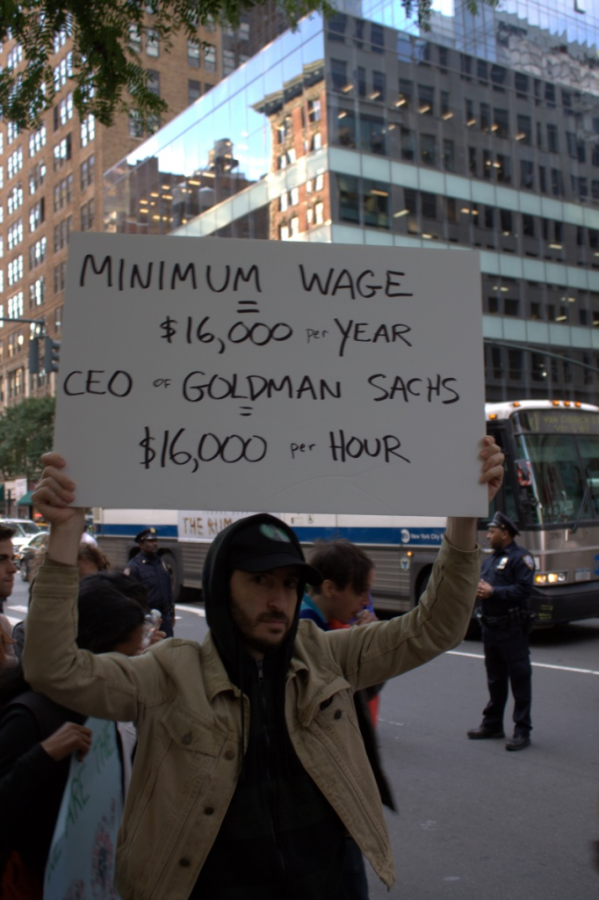
"Get a job," they're told by people who already have jobs, and choose to ignore the 16% underemployment rate and a minimum wage that has not kept pace with living expenses.

"Go out and vote," they're told by many of the same people who, in their next breath, complain about partisanship, gridlock, and the remarkable inability of Barack Obama to get even a god damn jobs bill passed during a period of widespread chronic unemployment.

Can you blame them for feeling as though the conventional avenues might not be a viable option?

And there's still more to this. A characteristically brilliant piece by Matt Taibbi hits the nail squarely on the head:

Occupy Wall Street was always about something much bigger than a movement against big banks and modern finance. It's about providing a forum for people to show how tired they are not just of Wall Street, but everything. This is a visceral, impassioned, deep-seated rejection of the entire direction of our society, a refusal to take even one more step forward into the shallow commercial abyss of phoniness, short-term calculation, withered idealism and intellectual bankruptcy that American mass society has become. If there is such a thing as going on strike from one's own culture, this is it....

People want out of this fiendish system, rigged to inexorably circumvent every hope we have for a more balanced world. They want major changes. I think I understand now that this is what the Occupy movement is all about. It's about dropping out, if only for a moment, and trying something new, the same way that the civil rights movement of the 1960s strived to create a "beloved community" free of racial segregation. Eventually the Occupy movement will need to be specific about how it wants to change the world. But for right now, it just needs to grow. And if it wants to sleep on the streets for a while and not structure itself into a traditional campaign of grassroots organizing, it should. It doesn't need to tell the world what it wants. It is succeeding, for now, just by being something different.

Let's pull out our cultural barometer and see what's in the air right now.

The acquaintance we heard from above blithely admits that people are getting fucked by the system. We know and accept that our government is broken, our politicians are bought, and nobody in power has the balls to give our most pressing issues anything more than lip service; we understand that the Supreme Court has basically tossed aside judicial impartiality, but we're also aware that nobody will listen if we complain. We know that the bankers who crashed the economy have gotten off scot-free and are still making billions of dollars ripping off the have-nots and helping the haves turn their money into more money, and most of us are apparently perfectly willing to let this slide. We accept that climate change is going to drown our cities and decimate our agricultural capacity, and we're not doing a thing to prevent or prepare for it. We know the food we eat is probably killing us, but that's cool too. We know the folks in the board rooms at our inescapable multinational corporations care singularly about profits, but we've come to expect that from them and learned to live with it. We've embraced the emptiness of our culture to the extent that we now celebrate vacuous bullshit with a lack of irony that would make Andy Warhol's speed-addled brain turn somersaults, and we're tired of trying to resist it. You already know all this; you don't need to be told. Nobody approves of how things are going and nobody's happy with how they are, but we've convinced ourselves that we have no choice but to shake our heads, take our stress-reliever of choice, and get on with our lives as they are, because nothing we do will make an ounce of difference.

And when a motley group of students, hippies, literati, and urbanites devises a model (albeit temporary) alternative and propose that things should be and can be different, we castigate and tear them down for having the nerve not to resign themselves to the insufferable status quo that the rest of us invited on ourselves and continue to hoist upon our backs.

The losers had it coming. God bless America.

Saturday, November 12, 2011

The Doubloon

(Image yoinked from Roger Lathbury)


For your reading pleasure tonight, we've got another of my favorite chapters of Moby Dick: "The Doubloon." This would be the part of the novel where Herman Melville goes ahead and illustrates the basic ideas of reader response criticism a century before the academics seized credit for it. Basically, several of the novel's characters are presented with a singular "text" -- the doubloon Ahab promised to the man who first espies the White Whale -- and each derives a different meaning from its symbols.

Of course, you needn't necessarily be a literature geek to enjoy what this chapter has to offer: Melville's characteristically mellifluous prose, his Shakespeare-inspired monologues, and his roguish sense of humor (given voice through Stubb). I haven't included the entire chapter -- only the first two-thirds or so. Nobody has that much else to add after Stubb and Flask, and most of it won't make much of an impression on the first-time reader without the context of earlier chapters.

As before, I've added a few helpful footnotes, and also inserted a few line breaks into Stubb's speech to make it a little easier to parse. Bon appetit!


CHAPTER 99 — THE DOUBLOON

Ere now it has been related how Ahab was wont to pace his quarter-deck, taking regular turns at either limit, the binnacle and mainmast; but in the multiplicity of other things requiring narration it has not been added how that sometimes in these walks, when most plunged in his mood, he was wont to pause in turn at each spot, and stand there strangely eyeing the particular object before him. When he halted before the binnacle, with his glance fastened on the pointed needle in the compass, that glance shot like a javelin with the pointed intensity of his purpose; and when resuming his walk he again paused before the mainmast, then, as the same riveted glance fastened upon the riveted gold coin there, he still wore the same aspect of nailed firmness, only dashed with a certain wild longing, if not hopefulness.

But one morning, turning to pass the doubloon, he seemed to be newly attracted by the strange figures and inscriptions stamped on it, as though now for the first time beginning to interpret for himself in some monomaniac way whatever significance might lurk in them. And some certain significance lurks in all things, else all things are little worth, and the round world itself but an empty cipher, except to sell by the cartload, as they do hills about Boston, to fill up some morass in the Milky Way.1

Now this doubloon was of purest, virgin gold, raked somewhere out of the heart of gorgeous hills, whence, east and west, over golden sands, the head-waters of many a Pactolus2 flows. And though now nailed amidst all the rustiness of iron bolts and the verdigris3 of copper spikes, yet, untouchable and immaculate to any foulness, it still preserved its Quito glow. Nor, though placed amongst a ruthless crew and every hour passed by ruthless hands, and through the livelong nights shrouded with thick darkness which might cover any pilfering approach, nevertheless every sunrise found the doubloon where the sunset last left it. For it was set apart and sanctified to one awe-striking end; and however wanton in their sailor ways, one and all, the mariners revered it as the white whale's talisman. Sometimes they talked it over in the weary watch by night, wondering whose it was to be at last, and whether he would ever live to spend it.

Now those noble golden coins of South America are as medals of the sun and tropic token-pieces. Here palms, alpacas, and volcanoes; sun's disks and stars, ecliptics, horns-of-plenty, and rich banners waving, are in luxuriant profusion stamped; so that the precious gold seems almost to derive an added preciousness and enhancing glories, by passing through those fancy mints, so Spanishly poetic.

It so chanced that the doubloon of the Pequod was a most wealthy example of these things. On its round border it bore the letters, REPUBLICA DEL ECUADOR: QUITO. So this bright coin came from a country planted in the middle of the world, and beneath the great equator, and named after it; and it had been cast midway up the Andes, in the unwaning clime that knows no autumn. Zoned by those letters you saw the likeness of three Andes' summits; from one a flame; a tower on another; on the third a crowing cock; while arching over all was a segment of the partitioned zodiac, the signs all marked with their usual cabalistics, and the keystone sun entering the equinoctial point at Libra.

Before this equatorial coin, Ahab, not unobserved by others, was now pausing.

"There's something ever egotistical in mountain-tops and towers, and all other grand and lofty things; look here, — three peaks as proud as Lucifer. The firm tower, that is Ahab; the volcano, that is Ahab; the courageous, the undaunted, and victorious fowl, that, too, is Ahab; all are Ahab; and this round gold is but the image of the rounder globe, which, like a magician's glass, to each and every man in turn but mirrors back his own mysterious self. Great pains, small gains for those who ask the world to solve them; it cannot solve itself. Methinks now this coined sun wears a ruddy face; but see! aye, he enters the sign of storms, the equinox! and but six months before he wheeled out of a former equinox at Aries! From storm to storm! So be it, then. Born in throes, 't is fit that man should live in pains and die in pangs! So be it, then! Here's stout stuff for woe to work on. So be it, then."

"No fairy fingers can have pressed the gold, but devil's claws have left their mouldings there since yesterday," murmured Starbuck4 to himself, leaning against the bulwarks. "The old man seems to read Belshazzar's awful writing. I have never marked the coin inspectingly. He goes below; let me read. A dark valley between three mighty, heaven-abiding peaks, that almost seem the Trinity, in some faint earthly symbol. So in this vale of Death, God girds us round; and over all our gloom, the sun of Righteousness still shines a beacon and a hope. If we bend down our eyes, the dark vale shows her mouldy soil; but if we lift them, the bright sun meets our glance half way, to cheer. Yet, oh, the great sun is no fixture; and if, at midnight, we would fain snatch some sweet solace from him, we gaze for him in vain! This coin speaks wisely, mildly, truly, but still sadly to me. I will quit it, lest Truth shake me falsely."

"There now's the old Mogul," soliloquized Stubb by the try-works, "he's been twigging it; and there goes Starbuck from the same, and both with faces which I should say might be somewhere within nine fathoms long. And all from looking at a piece of gold, which did I have it now on Negro Hill or in Corlaer's Hook, I'd not look at it very long ere spending it. Humph! in my poor, insignificant opinion, I regard this as queer. I have seen doubloons before now in my voyagings; your doubloons of old Spain, your doubloons of Peru, your doubloons of Chili, your doubloons of Bolivia, your doubloons of Popayan; with plenty of gold moidores and pistoles, and joes, and half joes, and quarter joes. What then should there be in this doubloon of the Equator that is so killing wonderful?

"By Golconda!5 let me read it once. Halloa! here's signs and wonders truly! That, now, is what old Bowditch in his Epitome calls the zodiac, and what my almanack below calls ditto. I'll get the almanack; and as I have heard devils can be raised with Daboll's arithmetic6, I'll try my hand at raising a meaning out of these queer curvicues here with the Massachusetts calendar. Here's the book. Let's see now. Signs and wonders; and the sun, he's always among 'em. Hem, hem, hem; here they are — here they go — all alive: Aries, or the Ram; Taurus, or the Bull and Jimimi! here's Gemini himself, or the Twins. Well; the sun he wheels among 'em. Aye, here on the coin he's just crossing the threshold between two of twelve sitting-rooms all in a ring.

"Book! you lie there; the fact is, you books must know your places. You'll do to give us the bare words and facts, but we come in to supply the thoughts. That's my small experience, so far as the Massachusetts calendar, and Bowditch's navigator, and Daboll's arithmetic go. Signs and wonders, eh? Pity if there is nothing wonderful in signs, and significant in wonders! There's a clue somewhere; wait a bit; hist — hark! By Jove, I have it! Look you, Doubloon, your zodiac here is the life of man in one round chapter; and now I'll read it off, straight out of the book. Come, Almanack!

"To begin: there's Aries, or the Ram — lecherous dog, he begets us; then, Taurus, or the Bull — he bumps us the first thing; then Gemini, or the Twins — that is, Virtue and Vice; we try to reach Virtue, when lo! comes Cancer the Crab, and drags us back; and here, going from Virtue, Leo, a roaring Lion, lies in the path — he gives a few fierce bites and surly dabs with his paw; we escape, and hail Virgo, the Virgin! that's our first love; we marry and think to be happy for aye, when pop comes Libra, or the Scales — happiness weighed and found wanting; and while we are very sad about that, Lord! how we suddenly jump, as Scorpio, or the Scorpion, stings us in the rear; we are curing the wound, when whang comes the arrows all round; Sagittarius, or the Archer, is amusing himself. As we pluck out the shafts, stand aside! here's the battering-ram, Capricornus, or the Goat; full tilt, he comes rushing, and headlong we are tossed; when Aquarius, or the Waterbearer, pours out his whole deluge and drowns us; and to wind up with Pisces, or the Fishes, we sleep.

"There's a sermon now, writ in high heaven, and the sun goes through it every year, and yet comes out of it all alive and hearty. Jollily he, aloft there, wheels through toil and trouble; and so, alow here, does jolly Stubb. Oh, jolly's the word for aye! Adieu, Doubloon! But stop; here comes little King-Post7; dodge round the try-works, now, and let's hear what he'll have to say. There; he's before it; he'll out with something presently. So, so; he's beginning."

"I see nothing here, but a round thing made of gold, and whoever raises a certain whale, this round thing belongs to him. So, what's all this staring been about? It is worth sixteen dollars, that's true; and at two cents the cigar, that's nine hundred and sixty cigars. I won't smoke dirty pipes like Stubb, but I like cigars, and here's nine hundred and sixty of them; so here goes Flask aloft to spy 'em out."

"Shall I call that Wise or foolish, now; if it be really wise it has a foolish look to it; yet, if it be really foolish, then has it a sort of wiseish look to it......."


1. Not only does Melville predict reader-response criticism, but catches a dim glimpse of Poststructuralism. (Do I give the man too much credit? Maybe.)


2. Pactolus: A river in Turkey. Classically famed for carrying gold dust.


3. Verdigris: Pronounced "ver-degree" (or "ver-degrees"). If you've ever been in an elementary school science class, you already know what it is. Think of how the Statue of Liberty has a green hue despite being made of copper.


4. Yes, yes -- the ubiquitous coffee chain is named after Starbuck, the Pequod's pious first mate. (Originally, the store's founders wanted to name the place after the ship itself. You can guess why they changed their minds.)

5. Golconda: A ruined fortress city in India that served as a crucial pillar of the diamond trade. Wiki says: "its name has taken a generic meaning and has come to be associated with great wealth.

6. Daboll: The arithmetic textbooks of Nathan Daboll were a fixture of American schools during the Nineteenth Century.

7. Flask (nicknamed "King Post") is third mate aboard the Pequod, and the lowest-ranking officer. The lens through which Melville expects us to view his interpretation of the doubloon is found in Chapter 41, which specifies Flask's "pervading mediocrity" as his distinguishing characteristic.

Monday, November 7, 2011

Pre-Solstice Status Report


Busy and more busy. Too busy, once again, to prepare a halfway decent update. Let's talk about what's been going on.

1.) New job. The topic is difficult to expound on without cataloging the personal and mundane particulars, so it will suffice to say that I'm adjusting to some very different circumstances, but also enjoying myself -- as much I can this time of year, anyway. (As I've probably said before, T.S. Eliot was full of crap: November is the cruelest month, not April, and February is a close second.) For all practical purposes, what this means is that barring any unforeseen fuck-ups, I have a source of income and a place to stay for the next two years.

2.) My first novel, The Zeroes. I have asked one gracious and eagle-eyed (90% of the time, this person is the first to point out any typos or misspellings in my latest comic strip, article, blog entry, etc.) reader to give one last proofread. After whatever mistakes he finds get fixed, I've got to figure the manuscript will be as close to clean as it will ever get. After that only remains the formatting and design work before I can put it on sale as an e-book or pay-per-print paperback.

Making the thing available isn't the endgame, though. I want people to read the damned thing -- otherwise, why would I have gone to all the trouble of writing it? (Ut doceat, ut moveat, ut delectet.) It would also be real nice if the fruits of my efforts could, even in some small way, defray the costs of the their sowing and tillage in Red Bull, cigarettes, and lost sleep.

So how do I go about convincing perfect strangers that the book is worth their money and time to buy and read?

Facebook/Twitter/Blogger spamming are usually pointless, especially if nobody's heard of you. I don't think the oft-advised electronic junk-mail campaign will do my cause much good at all. And this brings me to the topic of few other projects I've got on the table...

3.) Comics. I've begun work on a brand new recurring comic strip and a new website. (I'll be holding onto 8easybits.net, though. It's got too much sentimental value to mothball.) People may need their arms twisted into spending money and reading words without pictures, but they're certainly willing to read funny free comic strips. If all goes according to plan, people will read the strips regularly (provided I can post new ones regularly), come to appreciate my work, and will feel compelled to check out my book. That's how I'm hoping it will play out, anyway.

The new comic page will be updated weekly, but it won't see the light of day until I've got at least three months' worth of updates queued up and ready to go.

4.) Mother series writeups. Well, I'm pretty much out of Final Fantasy games to examine, and totally bereft of my old enthusiasm for the series besides. But I still like the Mother/EarthBound games an awful lot, and people sure do like reading about them. "Where can I find other stuff you've written?" The email will ask. "WELL!" I'll say...

This project is still very much in its nascent stages, and will begin following the completion of my...

5.) Novella. When I try to write a novella, it turns into a novel. When I try to write a short story, it turns into a novella.

This is what I'm working on now: a short story that ballooned into a novella. It just seems like the right thing to do at this time. It's about 65% done, which demands I begin considering what to do with it reaches 100%.

Do I self-publish it? Do I draft a new pitch letter and send it out to another hundred literary agents in exchange for another hundred rejection slips? Do I submit it to various literary magazine of various Midwestern state universities?

I think this story has the potential to be a very good, very relatable, very disturbing piece, but it's going to be a hard sell in a market where the shopkeepers are all convinced that people only want to read chick-lit and young adult fantasy serials. And for all I know, they're right. Who the hell reads literature anymore unless they're being forced?

I often wonder if this is all worth the trouble. It probably isn't.

And yet, my being capable of doing this work -- having the time, the means, and the circumstances necessary to keep at it -- is more precious to me than most everything else in my life, and I am ingratiated to you for taking the time to read and engage with it.

6.) The Sot-Weed Factor. The friend who lent it to me said, "this is the best damn book nobody's ever heard of." He was absolutely right. I am astounded by how it is consistently and coincidentally one of the smartest novels I've ever read, and one of the filthiest. One chapter will be a probing discussion about Heraclitan flux and personal identity; the next will be about John Smith and the unbreakable hymen of a young Pocahontas. Recommended!

Monday, October 31, 2011

"Memory"


(By H.P. Lovecraft, 1919)

In the valley of Nis the accursed waning moon shines thinly, tearing a path for its light with feeble horns through the lethal foliage of a great upas-tree. And within the depths of the valley, where the light reaches not, move forms not meet to be beheld. Rank is the herbage on each slope, where evil vines and creeping plants crawl amidst the stones of ruined palaces, twining tightly about broken columns and strange monoliths, and heaving up marble pavements laid by forgotten hands. And in trees that grow gigantic in crumbling courtyards leap little apes, while in and out of deep treasure-vaults writhe poison serpents and scaly things without a name.

Vast are the stones which sleep beneath coverlets of dank moss, and mighty were the walls from which they fell. For all time did their builders erect them, and in sooth they yet serve nobly, for beneath them the grey toad makes his habitation.

At the very bottom of the valley lies the river Than, whose waters are slimy and filled with weeds. From hidden springs it rises, and to subterranean grottoes it flows, so that the Daemon of the Valley knows not why its waters are red, nor whither they are bound.

The Genie that haunts the moonbeams spake to the Daemon of the Valley, saying, “I am old, and forget much. Tell me the deeds and aspect and name of them who built these things of stone.” And the Daemon replied, “I am Memory, and am wise in lore of the past, but I too am old. These beings were like the waters of the river Than, not to be understood. Their deeds I recall not, for they were but of the moment. Their aspect I recall dimly, for it was like to that of the little apes in the trees. Their name I recall clearly, for it rhymed with that of the river. These beings of yesterday were called Man.”

So the Genie flew back to the thin horned moon, and the Daemon looked intently at a little ape in a tree that grew in a crumbling courtyard.


(Image stolen from SnakeToast.)

Saturday, October 29, 2011

#occupy on the ground

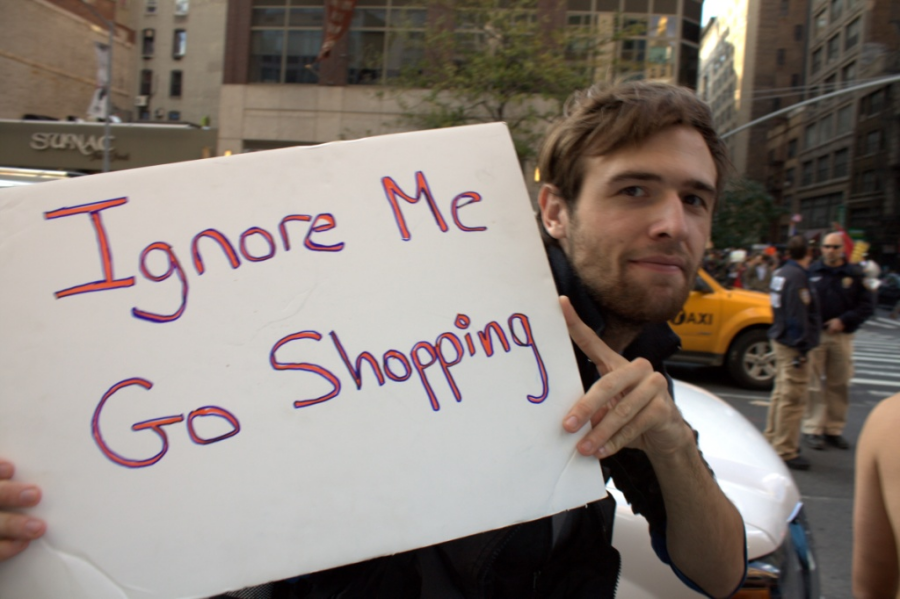
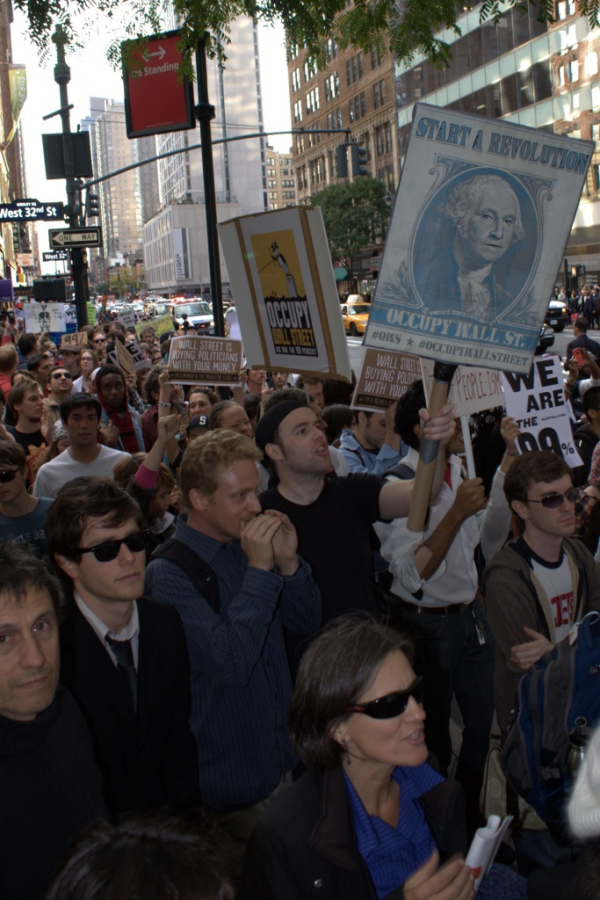
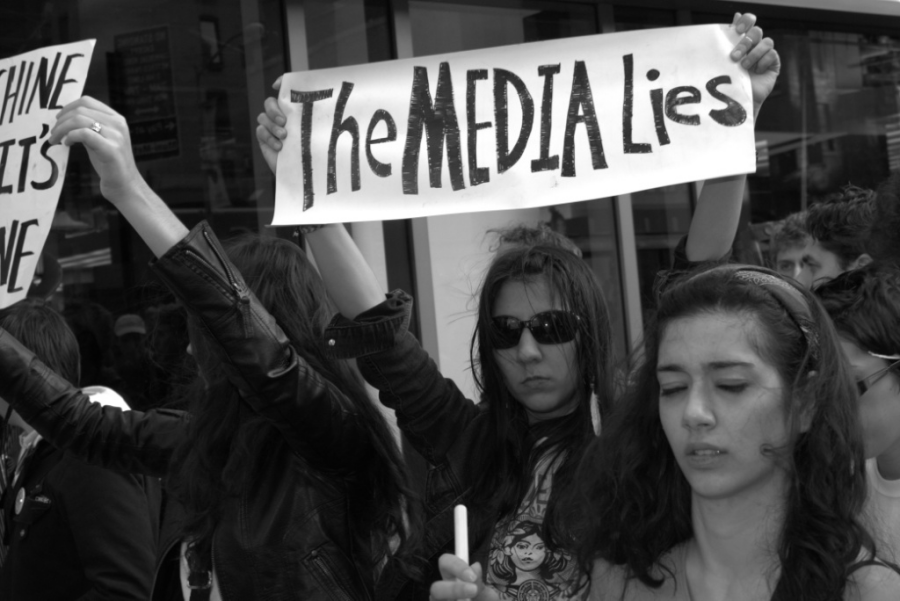
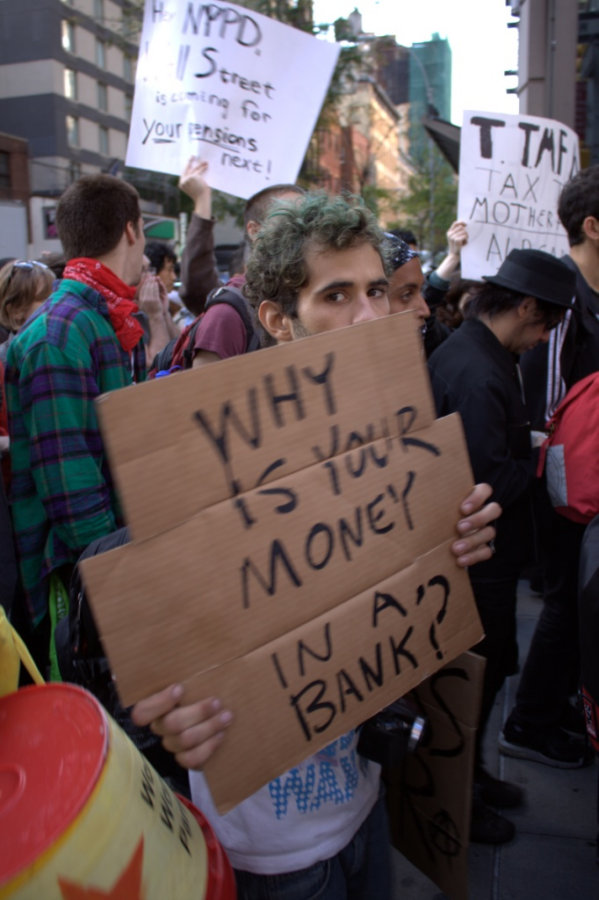
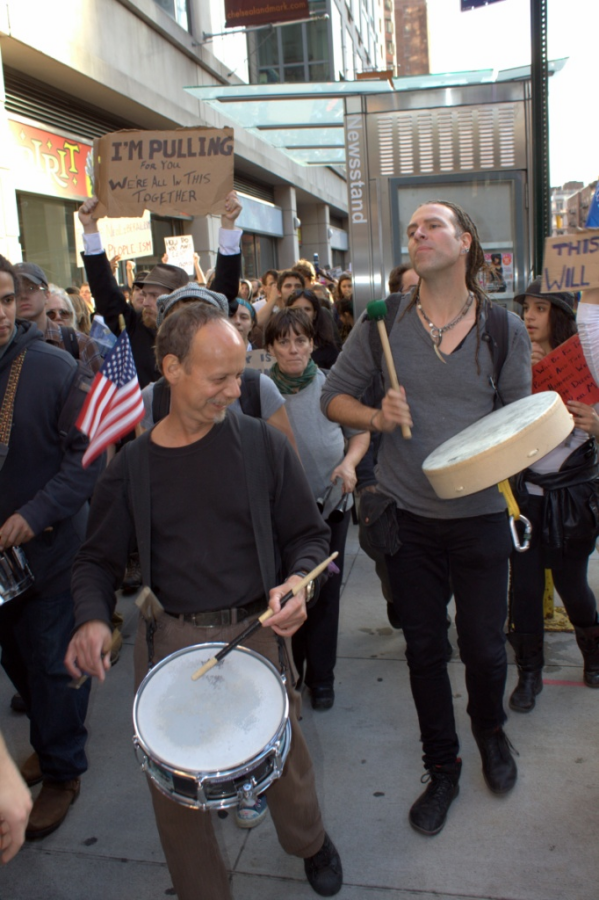
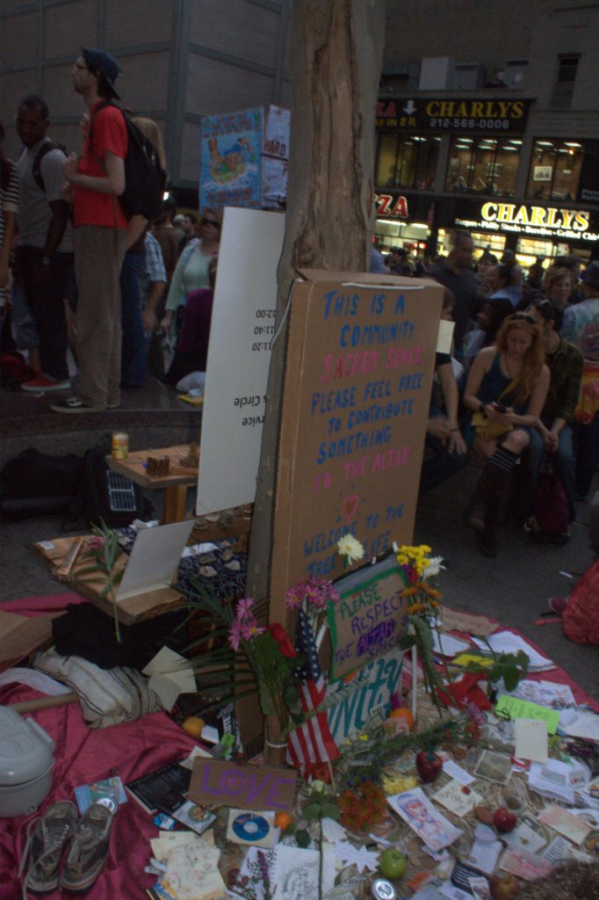
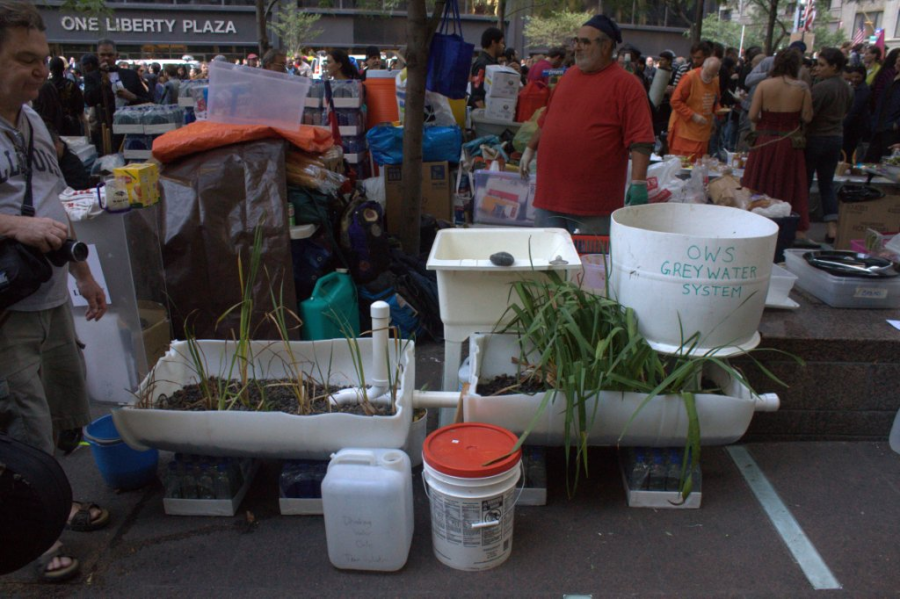
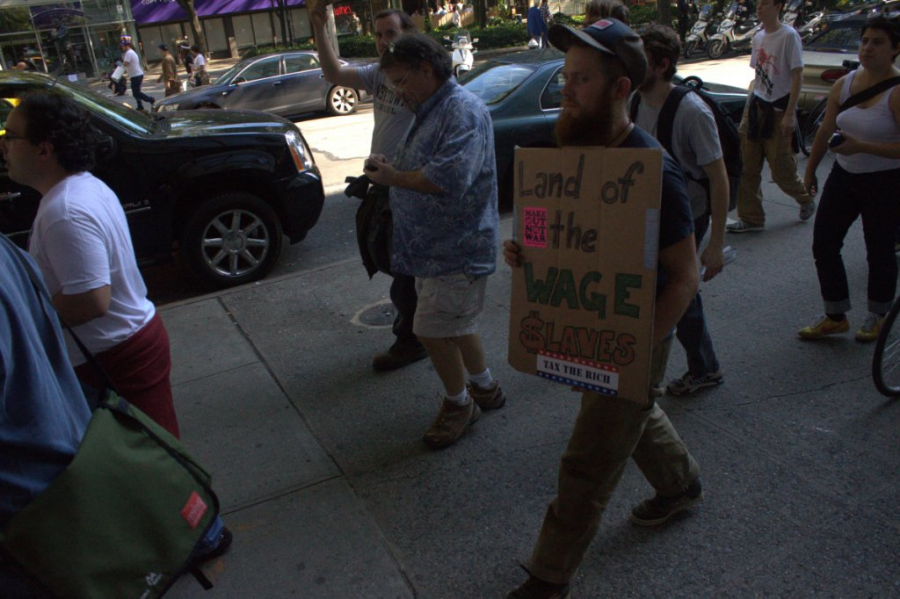
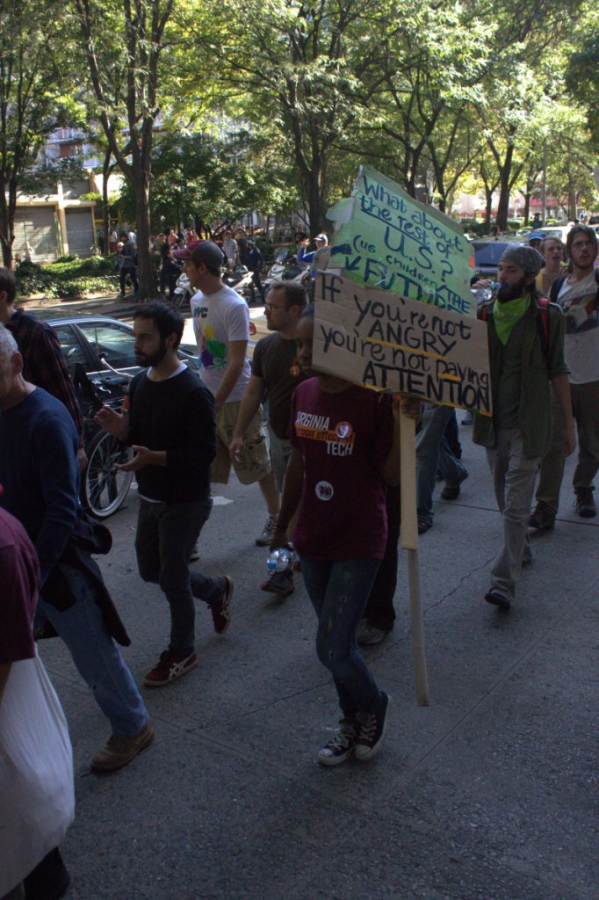
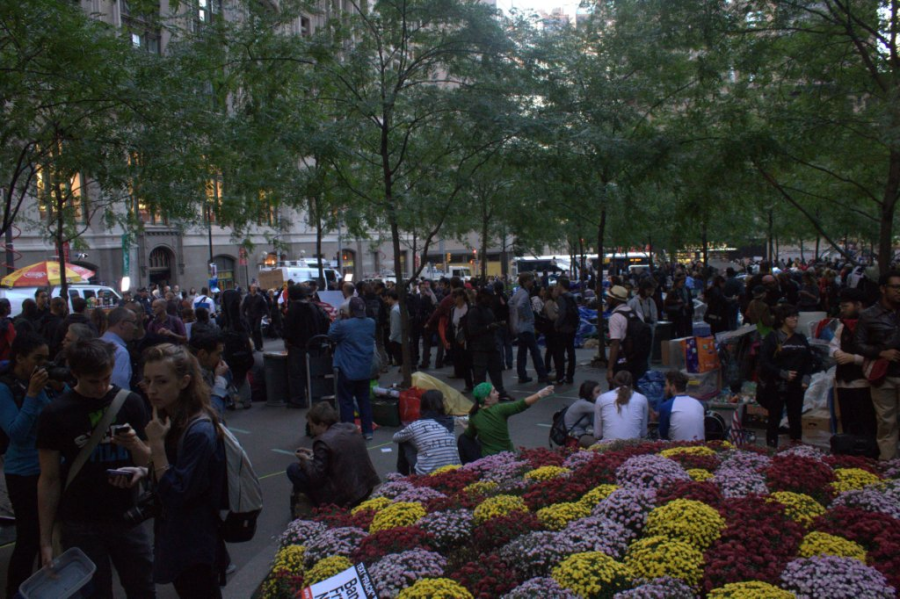
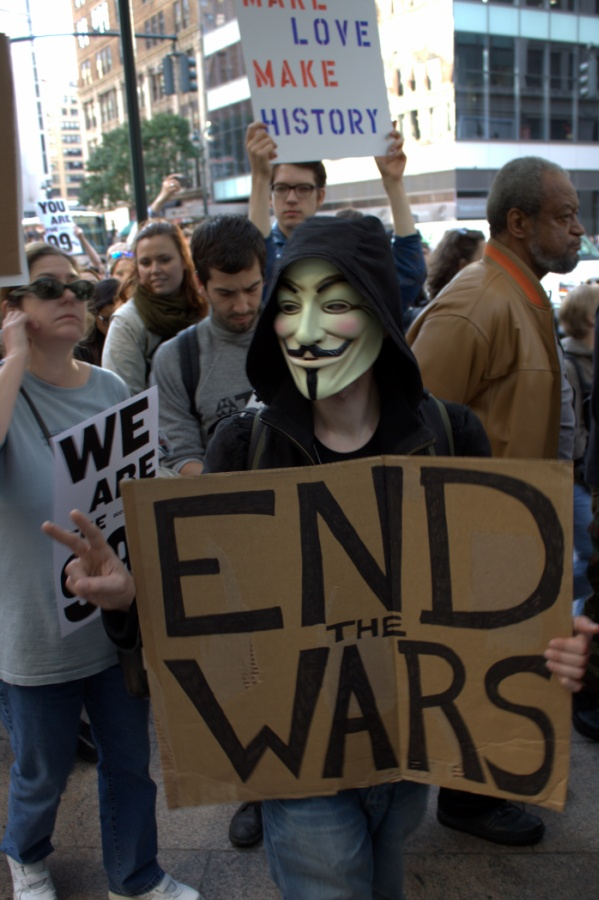
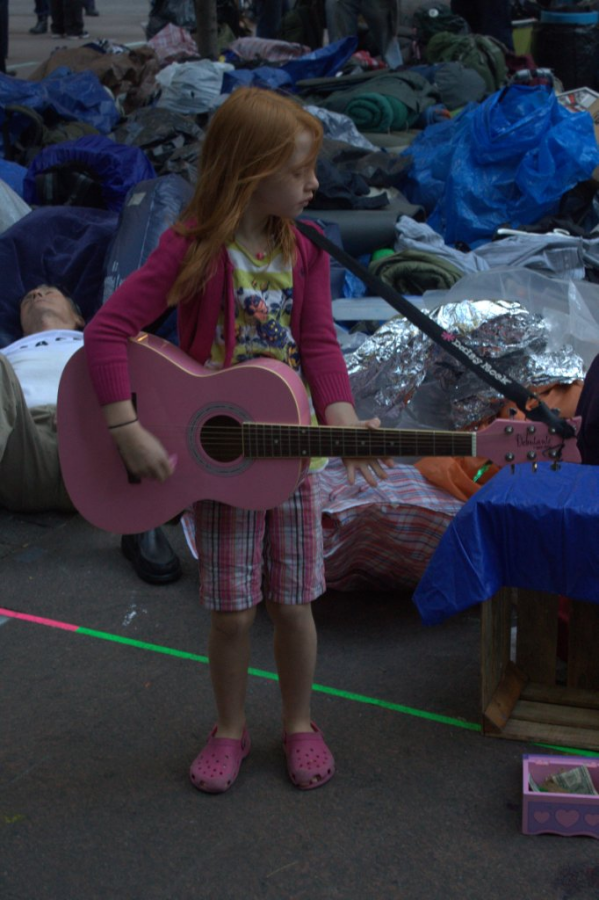
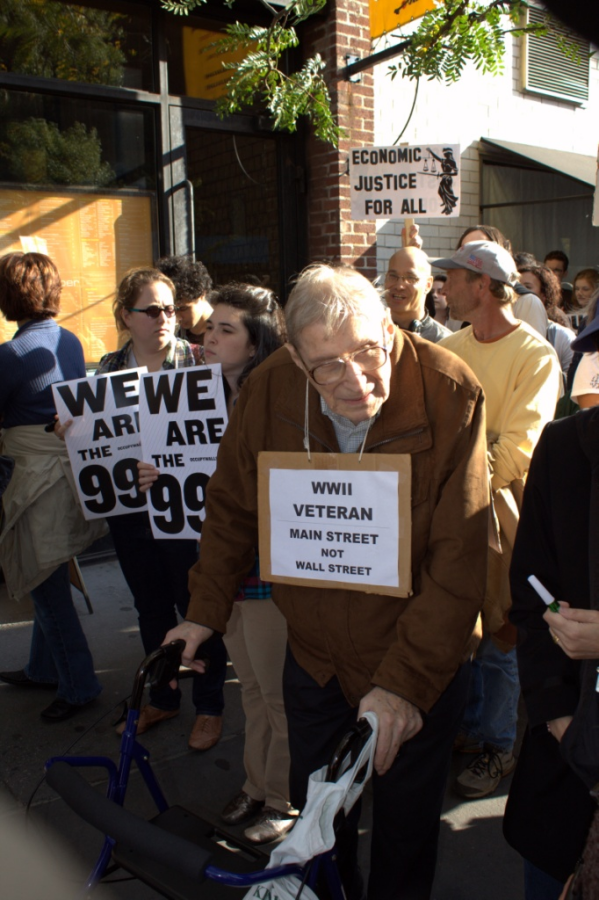
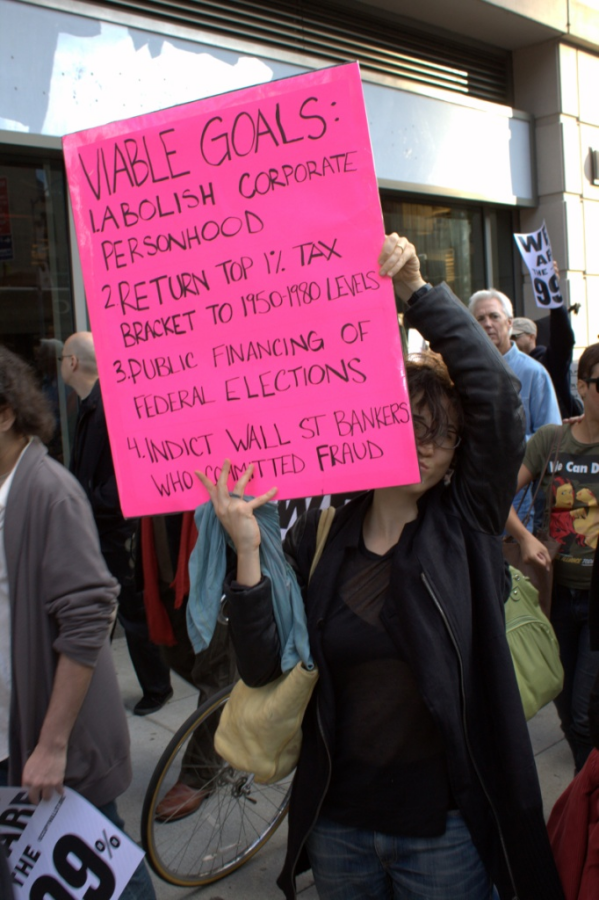
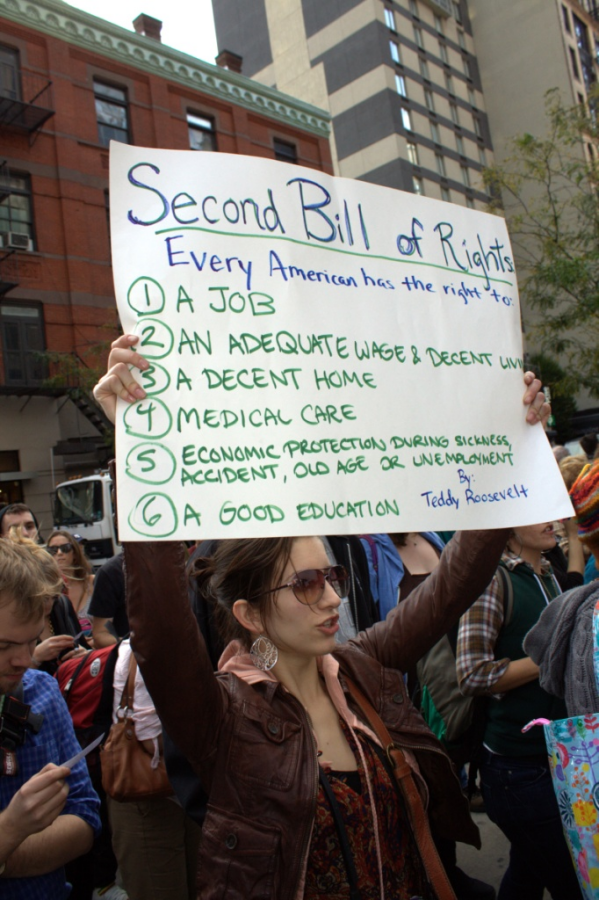
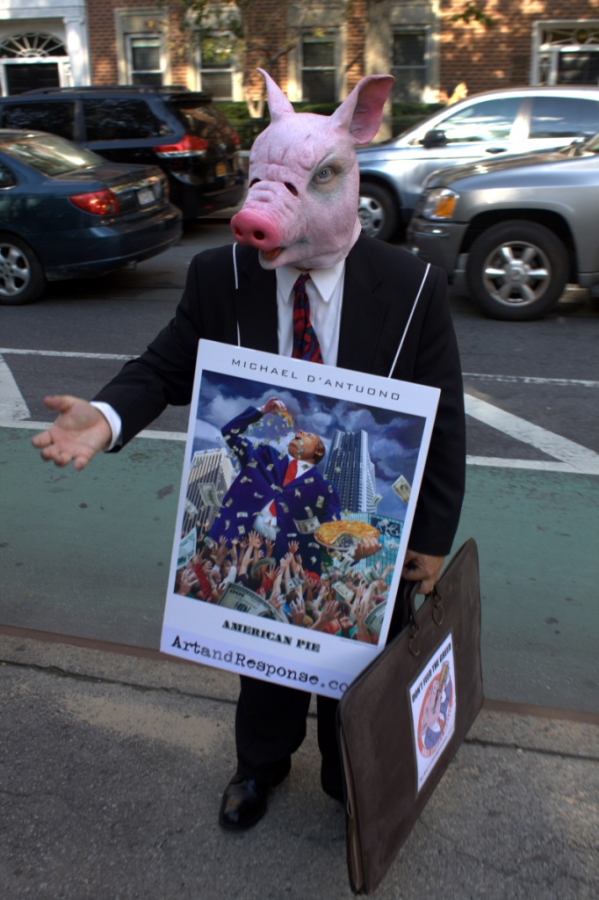
Well sports fans, I'm still sick -- somehow. Your guess is as good as mine. I've been directing what little energy I've had towards the completion of a few different long-term projects (and to answering email, Formspring questions, reader comments, etc.) so I'm once again short on a substantial update. Fortunately, shutterbug and patriot James is stepping in to give us a close-up look at the Occupy Wall Street protests that have been making the headlines lately. Most are thumbnails; click to see higher-res versions!


I've taken an interest in greywater systems ever since moving to the Quaker Farm. It's some interesting (AND EXTREMELY PRACTICAL) stuff.


"I'd occupy HER Wall Street," a friend commented when I showed him this photo. (Only he didn't say "Wall Street.")


"INFINITE GROWTH IS NOT POSSIBLE ON A FINITE PLANET."

"INFINITE GROWTH IS NOT POSSIBLE ON A FINITE PLANET."


This would be the Zuccotti Park you've heard so much about.


For the correlation between foreign wars and economic injustice, please see Martin Luther King's "Beyond Vietnam" address.


Correction: It was actually FDR.


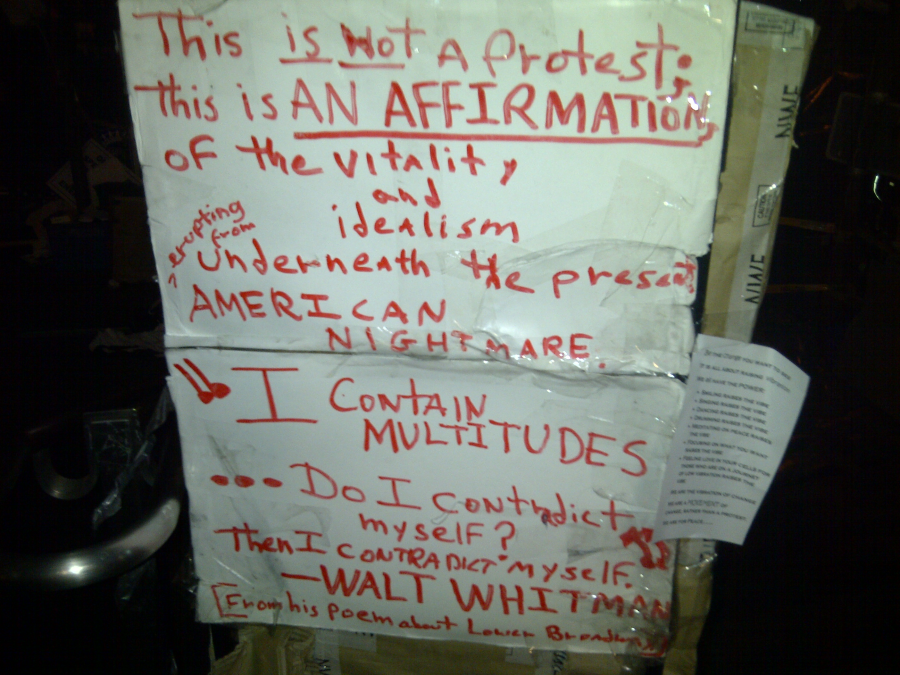
However good its author's intentions, this sign is mistaken. The quote is from Whitman's "Song of Myself," which (as the title might suggest) is not about Lower Broadway. If Walt does have a poem about Lower Broadway to his name, I'm having a hard time finding it. There are these two pieces, but they're obviously not what the person drafting the sign had in mind.

Tuesday, October 25, 2011

Fossilized Footprints & Relic Radiation

And I'm sick once again. Great. I've already hit the point where all I feel like doing is sitting and staring at the wall, so today I'll just post a few photographs from my trip back to Jersey this weekend because it means having to think that much less.

First: dinosaur footprints at the Riker Hill Fossil Site!


Mammal footprints at the same location:

Next, we visited the Horn Antenna behind the Lucent Technologies building in Holmdel!

(Behind that first door are many tubs of lubricant.)


To save you the trouble of typing it into Google yourself: what's the cosmic microwave background?

Meanwhile, across the street: a volleyball net.


Good god, I've got to lie down.

Jason C. says he can whip me up a concoction of garlic juice, ginger, and some other wholesome plants that will cure me right up if I can drink it and keep it down. We'll see how that goes.

Friday, October 21, 2011

#occupymuseums: Counterpoint

i just read your blog post on occupy museums and was going to comment there, but it seems that i can't from my work computer, so i thought i would email you my response. i was actually really surprised that as a maker of creative work who so far has not been completely embraced by the mainstream, you could reply in such a forcefully condescending way to the issues raised. of course you are entitled to your opinion and i completely understand what you are saying about how this reflects on OWS as a whole. and admittedly, getting in the faces of innocent museum visitors is not the most effective way to get a message across, i agree there. but i thought you might be interested to hear the thoughts of someone who has worked in museums but who also agrees to some extent with the issues raised by these protesters.

to begin with, of course the manifesto itself is flawed, but a lot of what OWS churns out is rushed and flawed; there isn't time to workshop these statements too much. the sentiment, however, is worth listening to.

museums have always existed to help educate and create models of sociability for people (i can cite my primary sources here if you'd like), and they are not making good on those responsibilities in this very crucial moment (this has been going on since the rise of late capitalism in the 80's, actually, but it is more important now that it has ever been before for museums to listen up, as there is so much momentum being generated by people speaking out against the capitalist machine and all of its far-reaching effects). when an important swath of the art being made today is responding to shitty socioeconomic conditions in an activist-inspired manner, museums--and here i'm talking about institutions that exhibit contemporary art, such as MoMA--should not only be planning blockbuster shows featuring established artists (who likely have workshops and apprentices creating their art for them). museums should be listening to their surrounding communities and finding ways to work into their agendas art that speaks to contemporary social needs, so that they can provide forums for relevant discussion as well as valuable models of sociability for their unmoored constituents.

naturally, museums have a hard time turning a profit, due in large part to a lack of federal funding--which is in no way the fault of museums themselves (MoMA and the Guggenheim are notable exceptions in that respect). thus, one deduces, they have to put on blockbuster shows and hike up their admission fees. however, i don't think that's the entirety of what these protesters rail against (and with a bit more thought, i wish they would have been more eloquent about this point). the art world--like the publishing world, like the music world; we all know this is happening in every creative field--has created a celebrity system, in which art dealers, financial backers, (some) artists, and hotshots on the boards of museums rake in most of the profits, leaving museum programming, maintenance, administration, etc., to suffer. that is something that those who are higher up in museums could do something about, but it is taken as a given part of museum structure and left in place. if anything, many people working within the structures of museums hope to get to the point where they are the ones at the top reaping the benefits, leaving the needs of their constituencies to be dealt with by those at the bottom (idealistic, passionate, and underpaid), who have no control over what ends up being shown and how the museum communicates its image.

yes, these protesters could band together to put on small group shows or something along those lines, as you suggest (assuming they haven't already been doing that, though i imagine that's a road they've been down...), but that is not only an almost impossible way to get one's message across on a broader scale--who, after all, besides the artists' artist friends would pay attention?--it is also reifies the existing structure in which established museums are off the hook when it comes to showing art that reflects how many of their constituents actually feel.

yes, it is hard to take something like art seriously when there is so much else at stake right now (careers, lives, basic freedoms), but blowing this off as some whiny kids who feel entitled to have their art shown in public is ignoring an important symptom of our society's deplorable condition. with art education chopped from public schools at an alarming rate, we should at least be able to depend on museums to help us build our identities through cultural expression.

full disclosure: i've been slaving away over a phd program application these past few weeks and had been making zero headway on my personal statement until reading about the occupy museums movement, the basic sentiment of which (the unfulfilled social responsibility of cultural institutions) has always been at the heart of my academic research. so i have a whole mess of emotions tied to all of this and i'm sorry if that becomes increasingly evident as my rant goes on. but i stick with what i said, though i respect that people who are passionate about seeing OWS succeed could see this splinter movement as a hindrance. OWS and OM (does that work?) are not completely parts of the same whole. but they are related and i wish more people would give that connection the time of day.


Hmm.